
Calming Brain Breaks: Quiet Activities to Settle Kids Down


You can usually feel it coming. The voice gets louder, the movements get faster, the jokes tip from silly to sharp, and a child who was fine ten minutes ago is heading for the edge of what they can manage. Calming brain breaks are what you reach for in that stretch — before the wave breaks, not after.
Saying "calm down" rarely works at this point. A wound-up brain can't reason its way back to calm; it has to be brought there through the body. And the most important part of that isn't the exercise — it's you.
Calming brain breaks are short, quiet pauses, usually 5 to 10 minutes of slow breathing, gentle stretching, or balance — that help a wound-up child settle their body and mind. Instead of burning energy off, they lower it, nudging the nervous system towards calm.
Key takeaways
- Calming brain breaks lower a child's arousal through slow breathing, stillness, and balance — the opposite job of an active break.
- Your calm is contagious: a child's nervous system borrows the steadiness of the adult next to them, so do the break with them.
- Rainbow breathing is one of the easiest calming moves to teach — and it works best when practised on easy days.
Why calming brain breaks work: your child borrows your calm
Most brain breaks for kids wake the brain up; calming ones do the reverse. A wound-up child is running in a higher gear — faster heart, shallower breath, less room for listening. Slow breathing is one of the few levers a child can pull directly to shift down. A review of studies in children and teens aged 6 to 18 found that diaphragmatic breathing activates the parasympathetic nervous system (the "rest and recover" branch) and that in healthy kids, it improved stress in most of the studies reviewed.
The second half is relational. Children learn to settle alongside a calm adult first, and only later on their own — this is co-regulation. Harvard's Center on the Developing Child puts it plainly: responsive relationships help children deal with stress and regulate their emotions and behaviors. So your slower voice and your own long exhale are part of the technique: a calming brain break you do with a child typically lands far better than one called out from across the room.

When to reach for a calming brain break
Timing matters more than which move you pick. Every child shows the build-up differently — one gets louder, another goes quiet and clingy. Over time, notice your child’s own signals and the situations where they tend to appear. That pattern is what turns a calming break from a rescue into prevention.
- Before the build-up. Most big feelings have a pattern: the pick-up after school, the end of screen time, the hour before bed, the minutes before a test. A calm break just ahead of a moment you know is hard works as prevention — it lowers the starting point.
- Early in the wave. Louder, faster, sillier, harder to reach — that's the window where a child can still follow you. Keep words minimal ("Let's do rainbows together") and start the move yourself.
If your child struggles to say how they feel, give them a scale instead of words. Our Feelings Thermometer lets a child point to how big a feeling is right now and shows a calming strategy to match. Asking "Where are you on the thermometer?" often reaches a child sooner than "What's wrong?" — and it tells you whether it's time for a rainbow breathing or just a quiet minute together.
- Not mid-meltdown. Once a child is past listening, it's too late to teach a technique. What helps then is safety, a few words, and your steady presence; the breathing can come afterwards.
And if a child is foggy rather than wound up, reach for an active reset instead — see our movement breaks guide.
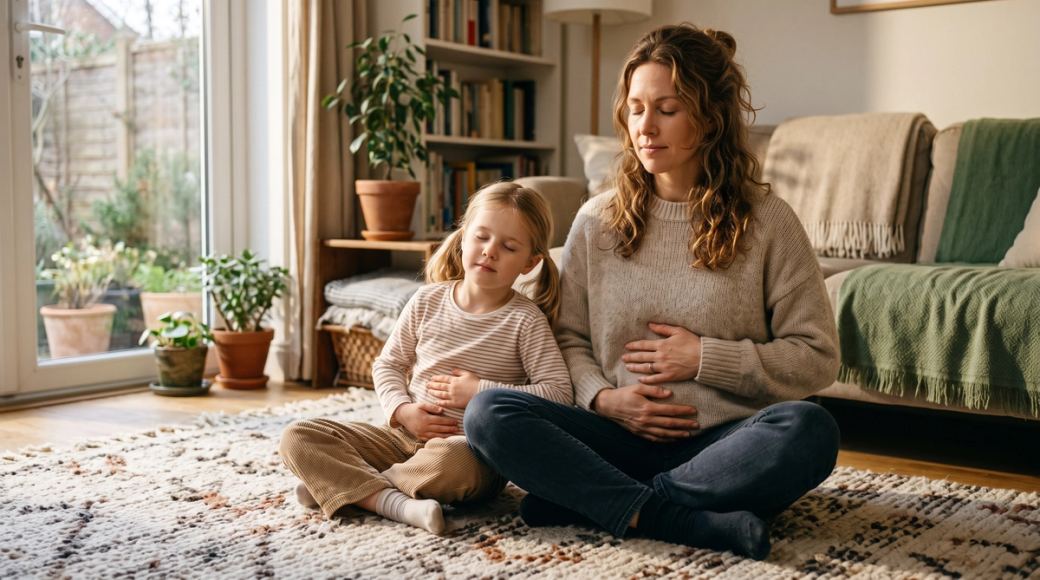
Quiet calming brain breaks to try
These quiet brain breaks need no equipment, very little space, and almost no talking. Each one takes a minute or two.
Belly breathing in pairs
Lie side by side, one hand on your own belly. Breathe in through the nose for a slow count of four, then out through the mouth for six. Younger children can rest a soft toy on their tummy and watch it ride the wave. Doing it in pairs is the point: your child matches your pace without being asked.
Turtle stretch
Kneel and fold forward until the forehead rests on the floor, arms tucked along the body — the turtle is in its shell. Take three slow breaths, then peek out and sit up, very slowly. The quiet space under the "shell" tends to shut the noise out for a moment.
One-foot balance
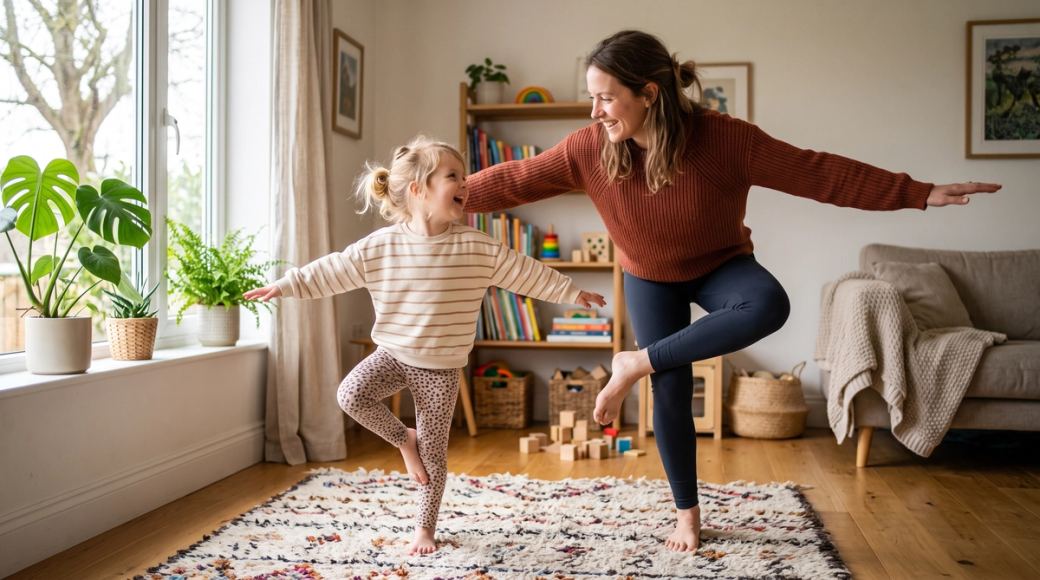
Stand on one foot, eyes on one still spot on the wall, for a slow count of ten, then swap. It's hard to stay revved up while you're concentrating on not wobbling.
Four-corner breath
Pick a rectangle — a window, a door, a book. Trace it with your eyes or a finger: breathe in up one side, hold across the top, out down the other, hold along the bottom. It's child-sized box breathing, and the shape gives a busy mind a track to follow.

Get a plan built around your child
Rainbow breathing, step by step
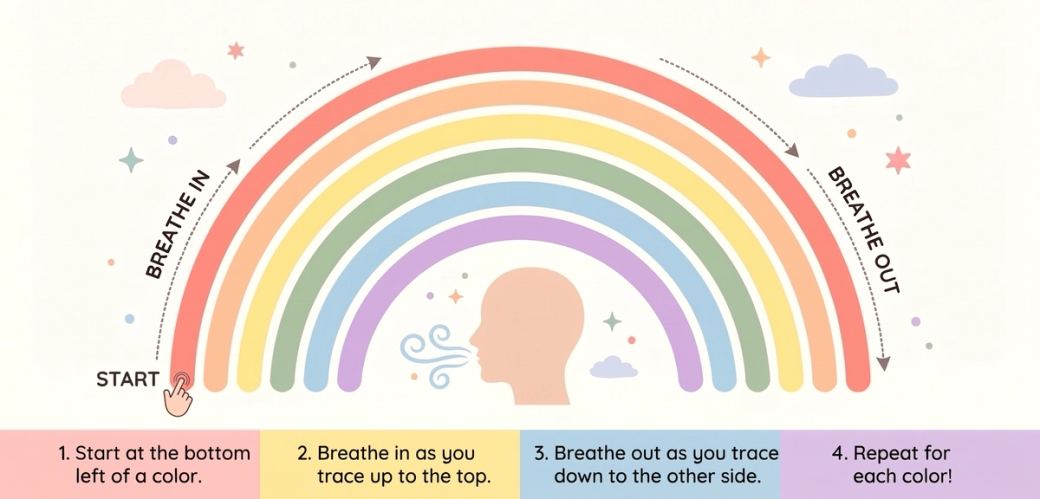
Rainbow breathing is a slow-breathing exercise in which a child traces a rainbow with their arms or a finger (breathing in as the arc rises, out as it falls) and names one color per breath. Seven colors, seven slow breaths, one full rainbow.
- Get ready. Stand or sit tall, arms relaxed by your sides.
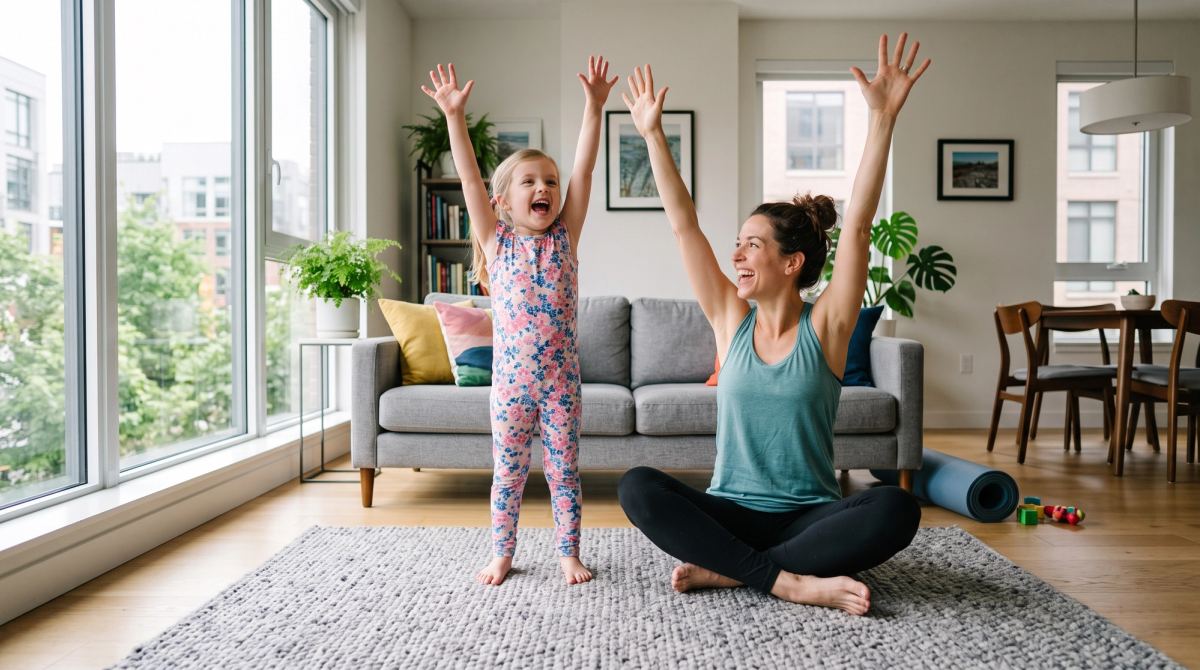
- Breathe in and rise. Breathe in slowly through the nose while you sweep both arms out to the sides and up over your head, drawing the top of the rainbow.
- Breathe out and fall. Breathe out slowly through the mouth as your arms float back down. Let the out-breath take a little longer than the in-breath.
- Name the color. Say it out loud, or whisper it: red. Then repeat for orange, yellow, green, blue, indigo, violet.
- Pause at the end. After violet, stay still for a moment with your hands on your belly. Notice how your body feels now compared with before.
Variations: in a small space (a desk, the car, a waiting room), trace the rainbow with one finger on paper or your palm. For 3- to 4-year-olds, three colors are plenty. Older children can close their eyes and stretch each out-breath a little longer.
However, in a busy shop, restaurant, or waiting room, a big arm sweep isn’t always an option. Keep a discreet version ready: a finger rainbow traced on your child’s palm, or a slow hand squeeze, tight on the in-breath and soft on the out-breath. Practise it at home first, so it’s a shared signal you both already know when the noise builds.
Why does it work? It's hard to rush a big, sweeping arc, so the arms pace the breath. The colors give a restless mind a simple job, and violet is a built-in finish line. And because it looks like a game, children who resist "breathing exercises" will often join a rainbow.
Calming brain breaks for the classroom
Calming brain breaks for the classroom follow the same logic. Use them coming in from recess, before a test, and in the last stretch of the day.
- Same cue every time. Dim the lights or ring a soft chime, and the room learns what's coming.
- Lead it slowly. A class takes its pace from the teacher — slow your own breath first.
- Go wordless. Once children know it, whole-class rainbow breathing needs no talking; your arms are the signal.
- Offer a calm corner. A cushion and a rainbow-breathing card let a child settle without being singled out.
For the full teacher's toolkit, including energising and focusing breaks, see our guide to brain breaks for the classroom.
The same calming approach works at the kitchen table after school — and it's part of what we build into our Brain Activation Plan for Kids: short daily practices a parent and child do together, matched to the child's age and to whatever feels hardest right now, from big feelings to drifting focus.

Find the plan that fits your child
When calm doesn't come
Some days, nothing lands — the rainbow gets refused, and the feelings run their course anyway. That's normal; the skill builds over many ordinary days. On those days, drop the technique and keep the connection: stay close, say less, and let your calm do the work. If big feelings are a regular part of your days, our guide on how to help a child with emotional meltdowns goes further into what's happening underneath.
Calming brain breaks are an everyday tool, not a replacement for support. Talk to your child's pediatrician or a school counselor if:
- big feelings are very frequent, very intense, or last a long time;
- they're getting in the way of school, friendships, sleep, or family life;
- your child talks about or tries to hurt themselves or others.
In my experience as a teacher, calming breaks can be particularly useful before school situations that children may perceive as challenging, such as a test or an oral assessment. In these moments, I pay attention not only to what is happening in the child’s body, but also to what may begin to happen in their inner dialogue: ‘I won’t be able to do it,’ ‘I won’t remember anything,’ ‘I’m going to get it wrong.’
A short calming break can help a child slow down and approach what comes next in a calmer and more attentive state. But I also believe it is important to gradually complement this work with greater awareness of how children talk to themselves. Calming the body and learning to recognise one’s inner dialogue can become two complementary tools for approaching a challenging moment with greater awareness.

Frequently asked questions
What are calming brain breaks?
What are the natural ways to calm a hyper child?
What is rainbow breathing?
How long should a calming brain break last?
Related articles
Movement Breaks: Get Kids Moving to Reset Focus
Movement breaks reset a child's focus by working the body first. Here's the science, when to use them, and movement break ideas for class or home.

Easy Brain Breaks for the Classroom
Brain breaks for the classroom: an evidence-informed teacher's guide to quick movement resets that refocus a class — by grade, energy level, and transition.
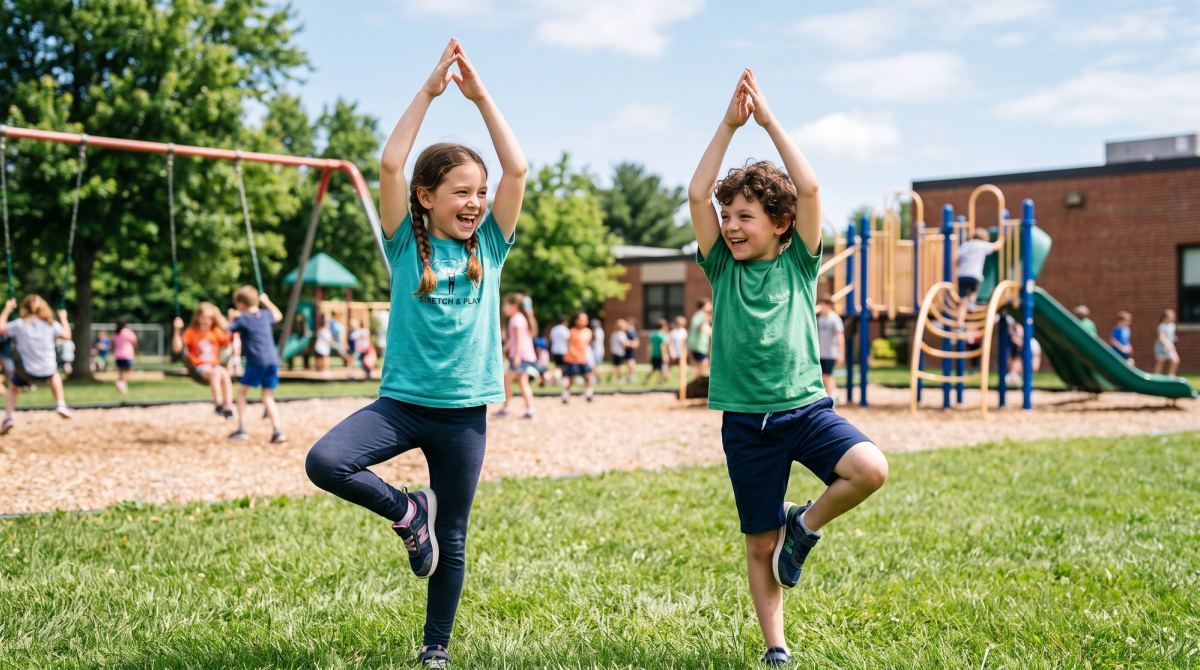
Brain Breaks for Students: Elementary & Middle School
Brain breaks for elementary and middle school students — age-appropriate movement resets that refocus a class or a tween at home, without the kiddie feel.
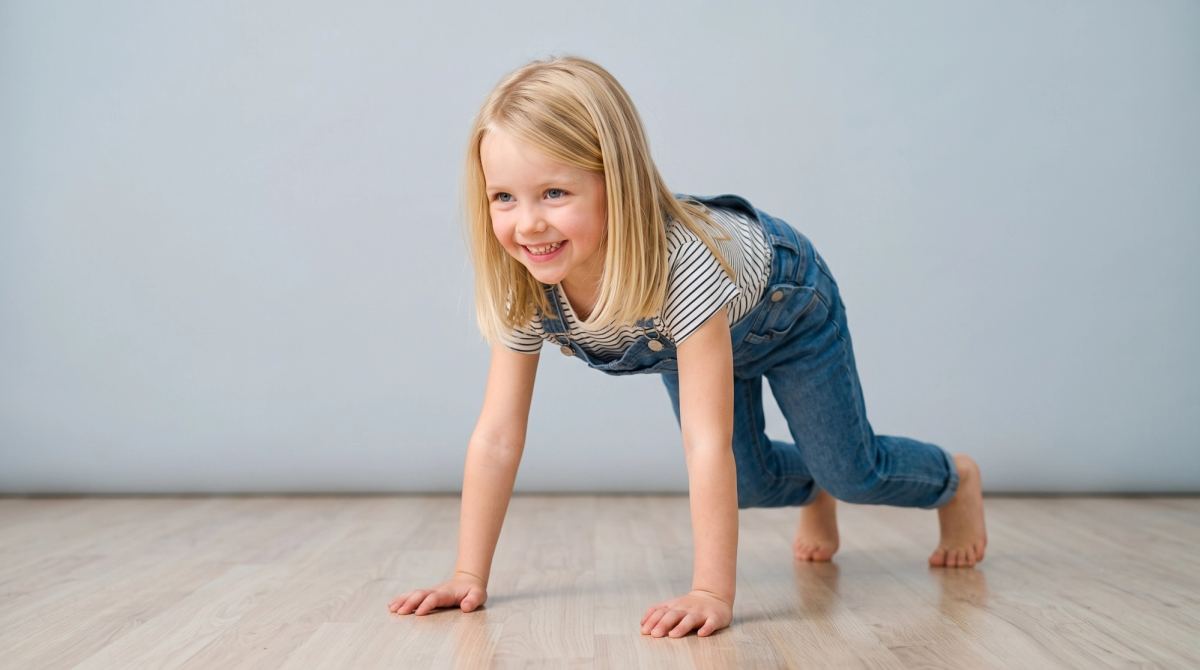
Brain Breaks for Kindergarten and Preschool (Ages 3–6)
Brain breaks for kindergarten and preschool: short, playful movement pauses for ages 3–6 that reset wiggly focus at circle time or at home.