
What is Vagus Nerve?


If you have been looking for ways to manage stress, reduce chronic physical tension, or improve your daily energy levels, you have likely come across discussions about the nervous system. At the core of these conversations is one central biological pathway. But exactly what is vagus nerve, and why has it become a focal point for modern biohacking and physical optimization?
When you experience periods of prolonged stress, your body often gets locked in a survival state. You might feel wired, tired, or constantly on edge, even when nothing is actively threatening you. This is not a lack of willpower; it is a physiological response. The vagus nerve acts as the primary counterbalance to this stress response. It is the body's biological brakes, responsible for shifting your system out of a high-alert state into a recovery mode.
Understanding what does the vagus nerve do is the first step toward taking control of your biology. Conventional advice often centers on passive relaxation: meditation or taking magnesium, but these methods frequently fall short when dealing with chronic exhaustion. When your body is stuck in a constant high alert state, passive rest is biologically insufficient to reset your baseline. Instead, you must actively engage your parasympathetic pathways.
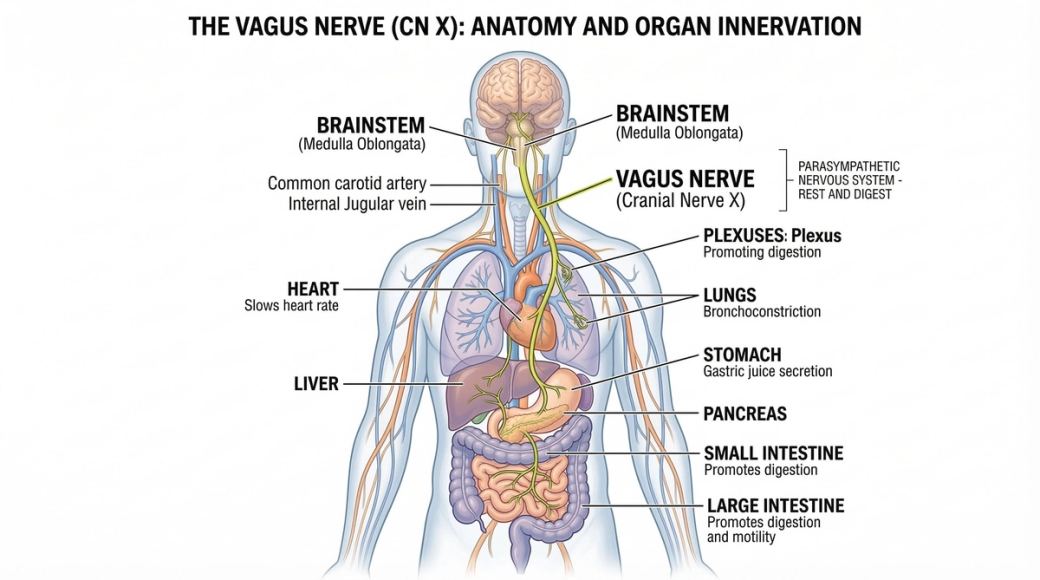
What is the Vagus Nerve position
To understand how to regulate your nervous system, it helps to understand its physical structure. The vagus nerve is the longest and most complex of the cranial nerves. Known clinically as the Cranial Nerve X, its name is derived from the Latin word for “wanderer”, which perfectly describes its extensive journey through your physiology.
The vagus nerve position begins deep within the lower part of the brainstem, known as the medulla oblongata. From the brainstem, it exits the skull and travels downward, splitting into a left and a right branch. These branches run parallel to your carotid arteries down through your neck, passing through your chest, and branching out extensively into your abdomen.
Because of this vast reach, the location of vagus nerve pathways intersects with almost every major organ system essential for your survival and recovery.
What is the Vagus Nerve location and function?
The vagus nerve location and function are highly integrated. Because it physically connects the brain to the heart, lungs, and digestive tract, it serves as a two-way communication highway.
Approximately 80% of its nerve fibers send constant data from your internal organs back up to your brain regarding the state of your body. The remaining 20% are sending commands from your brain down to your organs to adjust your heart rate, digestion, and respiratory pace.
This uneven 80/20 split is incredibly important for understanding how to manage stress. It means that your body is constantly sending far more information up to your brain than your brain is sending down to your body. If your chest is tight and your breathing is shallow, your organs are literally telling your brain that you are in danger, keeping you locked in stress.
However, with targeted physical practices, you can trigger a positive vagus nerve response and change the physical signals your body is sending upward. When your organs report a state of calm, your brain finally feels safe enough to power down the stress response and begin repairing.
How does the Vagus Nerve look like?
If you have never studied human anatomy, you might wonder, how does the vagus nerve look like? It is not a single, straight cord. Instead, if you were to look at a detailed vagus nerve location diagram, you would notice that it looks more like the root system of a tree. It consists of thick, cord-like bundles near the brainstem that progressively fan out into thousands of microscopic, thread-like fibers that wrap around and integrate into the tissues of your organs.
So, imagine the structure of a massive oak tree. The thick, main trunk represents the starting point of the nerve at the base of your brain. As this trunk travels downward through your neck, it splits into large, sturdy roots. When these roots reach deeper into the "soil" of your body — your chest and abdomen, they divide again and again. Eventually, they become millions of tiny, hair-like rootlets gently hugging your heart, lungs, and stomach.
Just like a tree’s roots absorb water from the earth to keep the tree alive, these microscopic nerve fibers constantly absorb physical information from your organs to send back to your brain. It is a living, sensing web that perfectly connects your entire system.

The neck Vagus Nerve pathway
One of the most accessible points of this system is the neck vagus nerve. As the nerve travels down from the brain, it passes directly through the sides of the neck, near the jugular vein.
This vagus nerve location in body is why targeted gentle neck stretches can so effectively influence autonomic function. Because the nerve sits so close to the surface of the skin in this area, it is highly receptive to external physical cues.
When you experience chronic stress, the muscles and fascia surrounding the cervical spine often tighten, creating a structural roadblock that can mechanically compress the nerve and restrict its signaling. You can intentionally release this physical tension through movement.
Alternatively, you can use cold exposure to trigger a rapid thermal response. Both methods bypass the stress-induced mental loop and send an immediate, physical “safe” signal directly to your brainstem.
What does Vagus Nerve do?
Now that we know where it is, we need to answer the core physiological question: what does the vagus nerve do?
In simple terms, it is the commander-in-chief of your parasympathetic nervous system. Your autonomic nervous system is divided into two main branches: the sympathetic (responsible for your stress response) and the parasympathetic (responsible for "rest-and-digest" recovery).
Think of the vagus nerve as your body's internal smart thermostat or a massive communication cable. When you face a stressful situation, like a tight deadline or a frustrating commute, your body naturally pumps out adrenaline. Your heart races, your breathing gets shallow, and your muscles tense up. This is your sympathetic nervous system hitting the gas pedal to help you survive.
Once the immediate stress has passed, your vagus nerve is supposed to step in and hit the brakes. It sends a gentle, calming signal down this communication cable, telling your heart to slow its rhythm, your lungs to take deeper breaths, and your stomach to digest your food. Without this built-in reset button functioning properly, your body would constantly run on overdrive, draining your daily energy and leaving you feeling permanently exhausted.
What is the purpose of the Vagus Nerve
Its primary biological purpose is survival through regulation. When a stressful situation happens, the vagus nerve is responsible for releasing a neurotransmitter called acetylcholine, which physically slows your heart rate, lowers blood pressure, and tells your body that it is safe to redirect energy toward digestion, cellular repair, and immune function.
To grasp its full impact, we must look at what does vagus nerve control on a systemic level. It directly influences:
- Heart Rate Variability (HRV): It acts as a pacemaker, controlling the intervals between your heartbeats to adapt to your environment.
- Respiratory Rhythm: It monitors oxygen levels and helps regulate a slow, steady breathing pace.
- Digestion: It manages the muscular contractions that move food through your digestive tract.
- Inflammation Management: It signals the body to reduce the number of pro-inflammatory cytokines, managing the physical stress load.
So, what does the vagus nerve regulate? Ultimately, it regulates your biological capacity to handle daily pressure. A well-regulated vagal tone means your body can quickly return to calm after a highly stressful event, rather than remaining stuck in physical tension.
What organs does the Vagus Nerve innervate
The list is extensive, which is why a dysregulated nervous system can cause such a wide array of physical symptoms, as it innervates:
- Heart
- Lungs
- Stomach
- Liver
- Gallbladder
- Spleen
- Small and large intestines
- Kidneys
Because it connects to all these vital organs, an imbalance in this system can show up as elevated resting heart rates, shallow breathing, digestive sluggishness, or constant physical fatigue.



Feel calmer, sleep deeper.
What causes Vagus Nerve damage
Many people who feel overwhelmed actually suffer from a dysregulated nervous system rather than permanent physical damage. However, understanding what causes vagus nerve damage can help clarify how to protect your biological foundation.
How does the vagus nerve get damaged in a clinical sense? Actual injury to vagus nerve structures can occur due to severe physical trauma, surgical complications (especially surgeries involving the neck or upper chest), chronic viral infections that attack the nervous system, or long-term metabolic conditions like severe diabetes, which can cause neuropathy.
As we speak about daily optimization, we are more often looking at functional impairment. Prolonged chronic stress, chronic inflammation, poor posture (such as "tech neck", which mechanically compresses the cervical spine and surrounding tissues), and shallow chest breathing can significantly impair the nerve's proper signaling.
Vagus Nerve spasm
Occasionally, stress or physical triggers can lead to a vagus nerve spasm. This temporary over-activation or misfiring can cause sudden drops in blood pressure and heart rate. But what does it actually feel like?
Think of a vagus nerve spasm as an abrupt biological system reboot. You might suddenly feel a wave of intense heat flush over your body, followed immediately by a cold, clammy sweat. Your stomach might unexpectedly drop or churn, similar to the sensation of falling on a roller coaster. You may notice a loud ringing in your ears, your vision might blur, and your legs can feel inexplicably heavy or weak. It is a deeply unsettling physical experience because your body is hitting the emergency brakes far too hard.
While these intense physical sensations are usually temporary, recurrent issues suggest that your autonomic nervous system is exhausted and needs active support to prevent such sudden crashes.

What stimulates Vagus Nerve?
If your nervous system is trapped in survival mode, you have to intervene at a biological level. So, what stimulates vagus nerve function?
Stimulation can be achieved mechanically, electrically, or chemically. The goal of stimulation is to increase vagal tone — a measure of how efficiently your vagus nerve helps you recover from stress. High vagal tone shows better emotional regulation, improved digestion, and greater resilience to life's daily pressures.
In medical settings, you might hear the term VNS. What is vagus nerve stimulation therapy? Clinically, VNS is an FDA-approved treatment that involves surgically implanting a device under the skin of the chest. This device sends regular, mild electrical pulses through the neck to the brain to treat severe, treatment-resistant conditions like epilepsy or deep clinical depression.
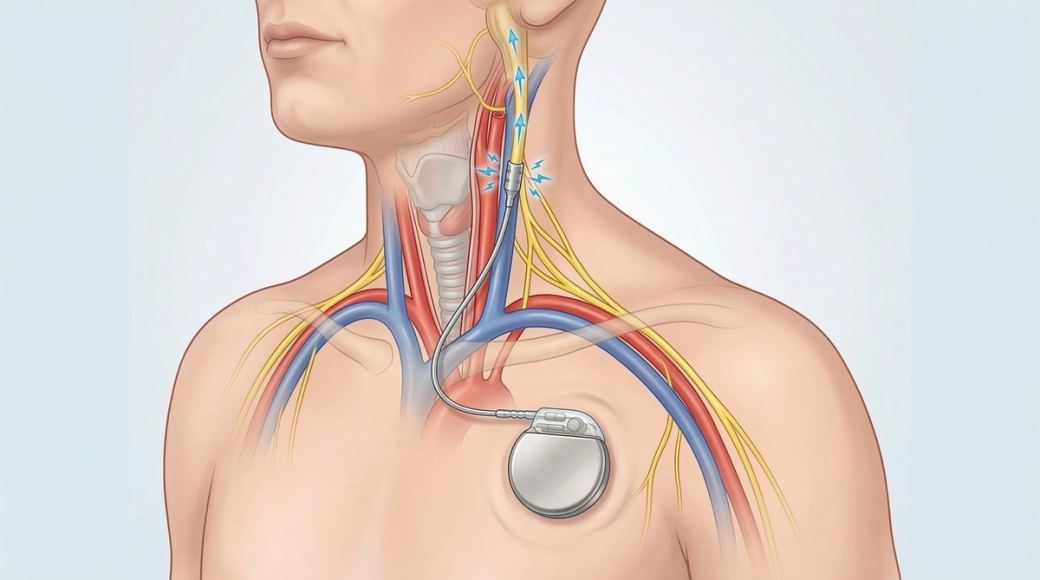
However, you do not need an implanted device to leverage the power of your biology. To support lasting physical vitality, natural, non-invasive biohacking methods are highly effective.
Thus, when you use natural practices to engage this system, what does stimulating the vagus nerve do?
- Lowers Heart Rate: It immediately signals the heart's pacemaker to slow down, reducing the feeling of a pounding chest.
- Improves Digestive Flow: It kicks the gastrointestinal tract back into gear, supporting natural nutrient absorption and reducing stress-induced bloating.
- Relaxes Fascial Tension: It prompts the release of tension in your muscles and connective tissues, alleviating the heavy feelings associated with a long workday.
- Enhances Cognitive Focus: By clearing the physiological noise of a fight-or-flight response, it allows the prefrontal cortex of your brain to function optimally, resulting in sharper focus and clearer decision-making.

How to actively support your Vagus Nerve
You cannot think your way out of a physiological stress response. True empowerment comes from taking physical action. That is the core of what we do at Leaply: making an optimized lifestyle naturally habit-forming by providing the right practices for your biology.
Building resilience shouldn't feel like a chore; it should be integrated into your day. We recommend a few expert-led tools to actively stimulate your vagus nerve:
1. Diaphragmatic deep breathing
Most of the time, we breathe shallowly into our chests without even realizing it. This actually tells your body that you are still stressed. Since the vagus nerve runs right through your belly area, taking deep, slow breaths is like a gentle massage for the nerve. It sends a clear biological message to your brain: “You are safe”.
Breathe in deeply through your nose for 4 seconds, letting your belly push out like a balloon. Then, slowly blow the air out through your mouth for 6 seconds. Making your exhale longer than your inhale is the key to turning down stress.
2. Vocal cord vibration
Remember the neck vagus nerve? Because the nerve passes close to the vocal cords, creating low-frequency vibrations in the back of your throat is a direct way to stimulate it.
When stuck in traffic or feeling an afternoon slump, take a deep breath and exhale while making a low, steady “mmm” sound. Feel the vibration in your chest and throat for several breath cycles.
3. Somatic movement and fascial release
Physical tension is a roadblock inside your body. When fascia tightens from stress, it compresses underlying vessels and nerves. Gentle, targeted movements, like slow neck rolls, spinal twists, and cat-cow stretches, actively restore tissue elasticity and open the pathways for systemic flow.

Take action: build your biological foundation
Your nervous system is constantly adapting to the environment you live in. By understanding what is vagus nerve functionality and integrating short, strategic micro-practices into your daily routine, you actively manage your biological capacity.
Taking care of your nervous system gives you clear focus and physical energy to handle heavy daily pressure. There is no magic overnight cure. Instead, it is about small, daily habits that build your resilience over time.
Related articles

Movement Breaks: Get Kids Moving to Reset Focus
Movement breaks reset a child's focus by working the body first. Here's the science, when to use them, and movement break ideas for class or home.

Easy Brain Breaks for the Classroom
Brain breaks for the classroom: an evidence-informed teacher's guide to quick movement resets that refocus a class — by grade, energy level, and transition.

Brain Breaks for Students: Elementary & Middle School
Brain breaks for elementary and middle school students — age-appropriate movement resets that refocus a class or a tween at home, without the kiddie feel.

Brain Breaks for Kindergarten and Preschool (Ages 3–6)
Brain breaks for kindergarten and preschool: short, playful movement pauses for ages 3–6 that reset wiggly focus at circle time or at home.