
5 Hidden Signs Your Child's Brain Is Overloaded


There's a particular set of moments parents tend to notice but never quite file. A chewed-through collar at school pickup. A bite mark on a sibling's arm. A kid who can't stop moving through dinner without realising. The 8:30 pm second wind, when the body should be settling.
If you've been quietly cataloguing these, wondering whether they mean something, hoping they don't — the most useful first thing to know is that why do kids chew on their shirts, why do they bite, why do they fidget, why do they overreact, — isn't a behaviour problem to fix. It's the body asking for input it can't yet get any other way.
This guide walks through five hidden signs of a nervous system at its threshold, the body-based mechanism behind each, and what helps at home. The kind of thing you can come back to on a hard Wednesday.
Key takeaways
- Hidden signs (chewing, fidgeting, biting, overreactions, always-wired energy) are usually the body asking for input, not behaviour problems.
- Each pattern routes back to the same mechanism — a nervous system regulating itself through the body while the brake is still wiring.
- The most useful response is body-based: route the input to safer outlets, build daily regulating practice, hold the boundary without making it the lever.
- No single sign is a label. The pattern across signs is what matters.

Sign #1: Your child chews on shirts, pencils, sleeves — anything they can get to their mouth
If you've typed "why do kids chew on their shirts" into a search bar, you usually started by asking a smaller question. Is this normal? The chewed collar, the pencil flattened, the hoodie string in shreds.
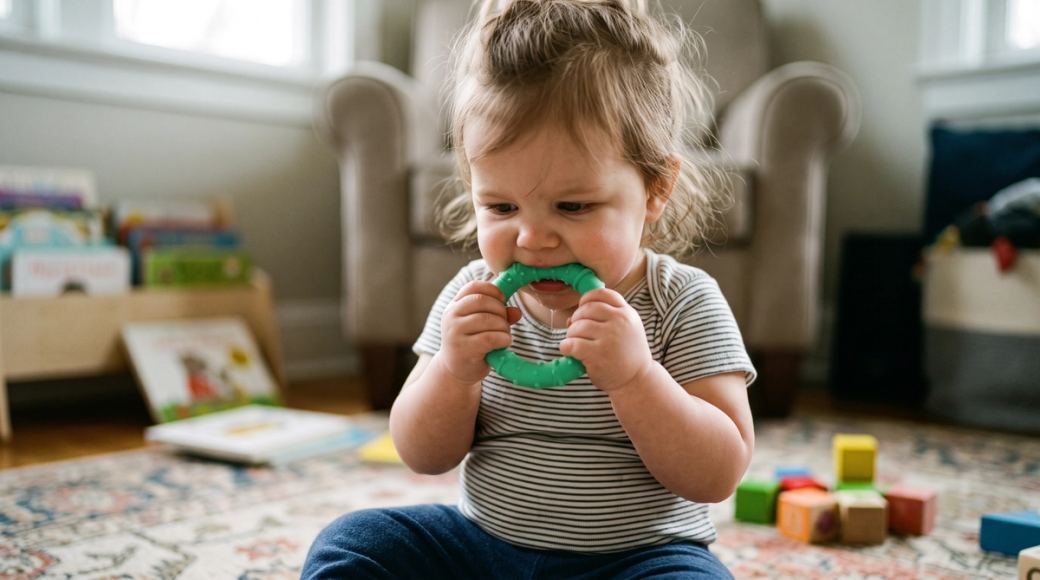
The mouth is one of the body's earliest and most reliable regulating inputs. Sucking, chewing, mouthing — all routes to the same vagal-tone calming circuitry that an adult uses, sipping a coffee or chewing gum through a hard conversation. When the nervous system needs input (to focus, to calm, to discharge), the mouth is one of the first places it reaches.
Some kids run a higher sensory load than others. The classroom is louder, the playground busier, the dinner table more stimulating. A child with a higher load and a still-building brake will reach for that input earlier and more often. The chewed shirt collar is a regulating behaviour.
The concrete list runs longer than parents expect: shirts, pen caps, pencils, sleeves, hoodie strings, jacket zippers, collars, cuffs. “Why do kids chew on their clothes” is the same question with different fabric.
The practical layer is route-the-input, not stop-the-chewing. Offer safer outlets — a piece of cold apple at the start of homework, a crunchy snack before the dinner table. Then reduce the upstream load that's driving the seeking. Less screen, earlier bedtime, slower morning.
Why kids chew on things in general
Oral sensory seeking — “why do kids chew on things” in the broadest form, is one of the most common regulating behaviours across all kids. For most, it eases as the regulating capacity builds.
Persistent chewing on non-food substances, or chewing that occurs alongside sleep, mood, or eating struggles, is worth a conversation with a paediatrician. Care, not fear.

Sign #2: Constant fidgeting — they can't sit still through dinner, story time, or homework
The chair tipping. The foot tapping. The kid spinning in circles while answering a question.
Fidgeting is proprioceptive input-seeking — the body asking for pressure, movement, joint feedback. Kids often need more input to stay regulated, not less. Telling a fidgety kid to "sit still" removes the regulating input they were getting in the first place, and makes the underlying focus harder, not easier.
For body-based practices that work with the fidget rather than against it, our brain breaks guide groups by goal — focus reset, energy release, calm-down, and stay under five minutes per drill. Why the link between movement and attention runs deeper than "wiggle to focus" is in our focus guide.
The shift that helps most is building the fidget into the activity rather than fighting it. A textured pencil grip during homework. A heavy-work job — carrying the laundry basket, pushing the chairs in — before story time. Each gives the body the input it was about to take anyway, in a form that doesn't compete with the task in front of it.
A child who needs to move to focus isn't undisciplined. Their nervous system is doing exactly what nervous systems do.

Sign #3: Your toddler is biting — siblings, friends, sometimes you
Most parents searching “toddler biting” started Googling at 9 pm after a daycare report or a sibling tear-fest. You're not failing. You're watching an overflow you don't yet have a frame for.
Toddler biting sits at the intersection of three developmental realities. The brake — the prefrontal inhibitory circuitry that pauses an impulse — is barely “online” at 18 to 36 months. The mouth is still a primary regulating input. And language hasn't caught up to feeling. Frustration, overstimulation, joy, fatigue — all can route through the mouth before any other channel is available.
The four most common triggers, in roughly the order parents see them: overstimulation (a loud party, a long day), frustration (a toy snatched, a snack delayed), tiredness (the 5 pm danger zone), and occasionally, joy that's too big for a body to hold.
Biting peaks around 18 to 24 months and usually eases as language and the brake build. Older kids who haven't aged out — or whose biting sits inside a wider pattern of overflow — are covered in our hyperactivity and impulsivity guide, where impulsive behavior in children gets the full focus.
How to stop a toddler from biting
- Come close (don't move away). Name the boundary once and hold it without escalating — "biting hurts, I won't let you bite." Redirect the body: a teether, a piece of apple, a heavy-work job carrying something across the room. The boundary is named once; the body is offered another channel for the same input.
- Repair after, once the body is back online. Name what happened in short words and what the child can do next time. "When you're frustrated, you can come find me. You can squeeze the pillow." The script becomes available because the brain is available — not the other way around.
- The daily layer is what reduces the next overflow. Chewy textures at meals, more rough-and-tumble play, predictable sleep, and body-based practices the child can return to before the threshold is reached. Same logic as Sign #1 — route the input the body is asking for, that fits the day.
Sign #4: They overreact to things that look small — a sock seam, a tag, a "no"
The meltdown over a sock seam. The full-body collapse at "we're out of the blue cup." The tag in the t-shirt that becomes a twenty-minute event.
When the nervous system reaches its threshold faster than the regulating circuits can catch up, small triggers land as big triggers. The size of the reaction reflects the size of the internal load, not the size of the external event.
A child overreacting isn't being dramatic or manipulative. The nervous system is doing arithmetic that the parent can't see. Every input across the morning has been adding up (the dressing, the hair, the noise from a sibling, the missed favourite cup, the rush to the car) and the seam is where the running total hit the ceiling.
The in-the-moment script for these floods, plus daily emotional regulation activities for kids that build the brake over time, can be found in our meltdowns guide.
Try an earlier bedtime on busy days. A slower morning before a school day. The thing that landed last gets blamed; the thing that helps is reducing what came first.

Sign #5: They're always "wired" — late bedtimes, second winds, a body that won't slow down
The kid who's exhausted but can't slow down. The second wind at 8:30pm when the body should be settling. The crash into sleep mid-sentence at 9:45 — earned, not chosen.
The regulating-down circuitry hasn't been on long enough to bring the body back to baseline before the next input arrives.
This isn't a discipline issue, and it isn't a screen-time issue alone (though screens compound it). It's a regulating capacity that hasn't been built yet, or a daily load too high for the capacity that has. The full in-the-moment + daily layer for hyperactive patterns sits in our hyperactivity guide, where how to calm a hyperactive child is mapped out step by step.
The wind-down lever is slow-rhythm vagal-tone input. Paired breathing in dim light. Heavy-pressure cuddles. One predictable body-based practice during the day so the system has somewhere to discharge before bedtime, not at it. The body learns the pattern before it's needed.


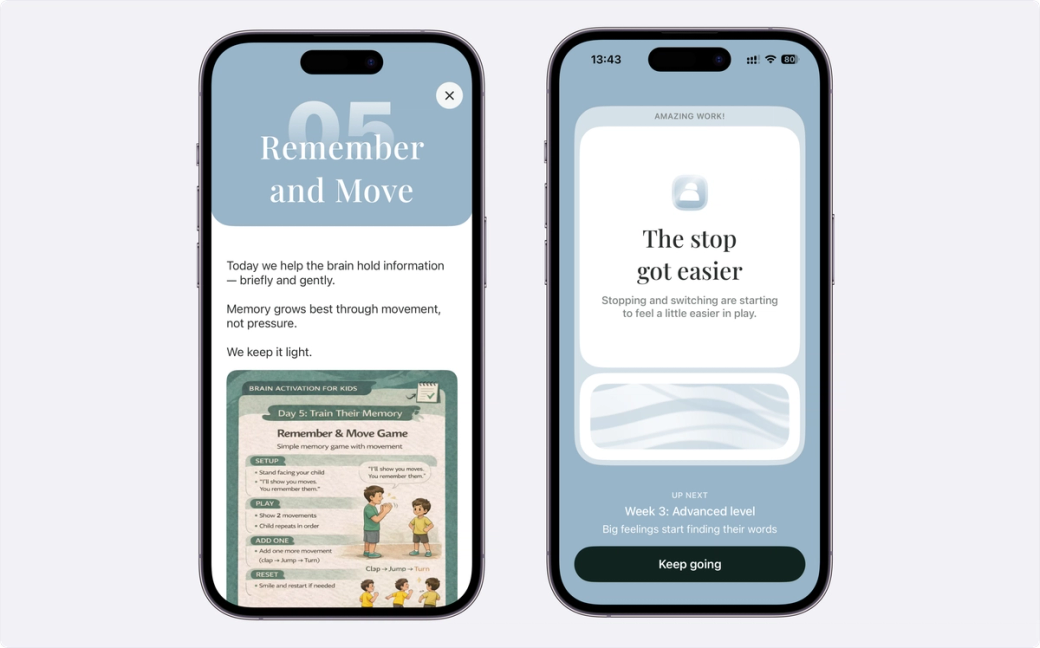
Want a daily plan built around the sign you noticed most?
Frequently asked questions
My toddler is biting — is this a sign of something serious?
Should I stop my child from chewing on things, or let them?
When should I talk to a doctor about these signs?
What the signs are asking for
The signs aren't symptoms. They're regulating cues. Each one is the body asking for input it can't yet get any other way — chewing for oral input, fidgeting for proprioceptive input, biting for the same, plus overreactions for a system at threshold, tired-but-wired energy for a dial stuck near the top.
The most useful thing a parent can do is route the input the body is asking for, build the regulating capacity in calm everyday moments, and hold the boundary without making it the lever. None of it is dramatic. All of it compounds.
If you've been wondering why do kids chew on their shirts (or bite, fidget, and overreact) — the honest answer is that they're not broken, and you're not failing. The nervous system is doing what nervous systems do while the brake catches up.
Get the plan for your kid
Related articles

Movement Breaks: Get Kids Moving to Reset Focus
Movement breaks reset a child's focus by working the body first. Here's the science, when to use them, and movement break ideas for class or home.

Easy Brain Breaks for the Classroom
Brain breaks for the classroom: an evidence-informed teacher's guide to quick movement resets that refocus a class — by grade, energy level, and transition.

Brain Breaks for Students: Elementary & Middle School
Brain breaks for elementary and middle school students — age-appropriate movement resets that refocus a class or a tween at home, without the kiddie feel.

Brain Breaks for Kindergarten and Preschool (Ages 3–6)
Brain breaks for kindergarten and preschool: short, playful movement pauses for ages 3–6 that reset wiggly focus at circle time or at home.