
How to Reduce Screen Time for Kids | Healthy Habits with Leaply
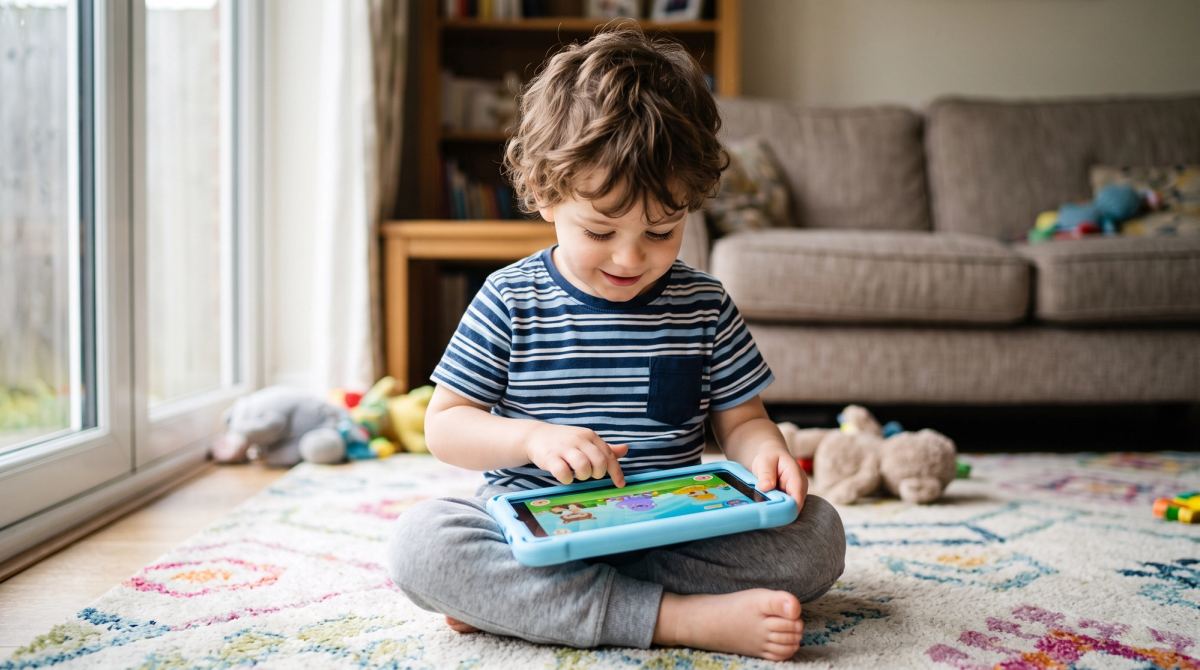

If you're reading this at the end of another screen battle — the bedtime negotiation, the car-ride "just one more episode," the meltdown after the iPad comes off — you're in the right place, and you're not alone.
Most parents we hear from are running the same daily script. The good news: figuring out how to reduce screen time for kids doesn't mean a stricter rulebook or a screen-free week of heroics. It means a calmer method.
Children reach for screens because screens work fast — bright, easy, predictable. That's not weak parenting; it's a design problem we can solve gradually.
Here, we'll cover what realistic limits look like by age, six practical strategies that actually reduce screen time without tantrums, and how to build healthy digital habits that hold.
The core principle behind all of it: replace, not remove.
Key takeaways
- Most children today get more screen time than feels right — and most parents already sense it. The question isn't "ban or allow." It's replace, not remove.
- Recommended ranges shift with age: under-2 minimal, 2–5 around an hour, school-age more flexible but bounded.
- The hardest part of reducing screens is the transition off the device, not the time limit itself. Calm transitions plus something to swap in beat strict rules every time.
- Long-term, healthy digital habits come from short daily windows of off-screen connection — what we call brain activation exercises, not from screen-free weekends.
Why screen time matters for your child's developing brain
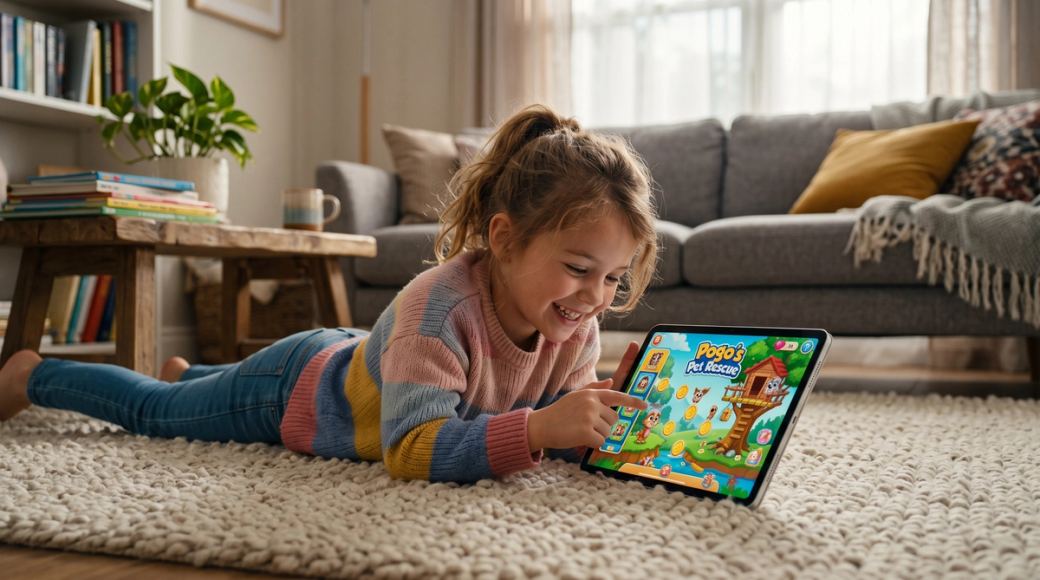
Screen time and child brain development are linked in ways more subtle than "screens rot brains." The picture is about what screens out-compete, not what screens contain.
- Dopamine and the slower joys. Kids' brains are wired to seek novelty and quick rewards. Short-form video, app loops, and bright sound-and-color packages deliver these rewards faster and more reliably than most off-screen play. Over time, the slower rewards (a story heard in full, a tower built without help) start to feel boring by comparison. That's not character. It's the brain calibrating to the strongest signal in the room.
- Attention recovery. After an intense screen session, kids often need 15–30 minutes of "down-regulation" before they can settle into a slower activity. Many parents notice this as the "post-iPad reactivity" — the meltdown over a sock, the homework refusal, the bouncing off the walls. That same nervous system is behind the focus struggles we cover in our piece on how to help your child focus — a different trigger, same underlying state.
- Sleep. Evening screen exposure shifts circadian timing — light, content arousal, and posture all play a role. The American Psychological Association notes that "technology use particularly within one hour of bedtime… is associated with sleep disruptions." That's why most pediatric guidance recommends a screens-off hour before sleep.
- Eye strain. Extended close-up screen use can contribute to eye fatigue, dryness, and what pediatric ophthalmologists call digital eye strain. The 20-20-20 rule — every 20 minutes, look 20 feet away for 20 seconds — is a common practical mitigation.
The bright kids who respond most to screens are also the ones still building self-control. That gap isn't a flaw — it's a window we work with.

How much screen time is too much? Age-banded guidelines
Most parents land on this article asking how much screen time is too much for kids? The honest answer: there's no universal number, but there's well-established starting-point guidance, age by age.
The World Health Organization publishes age-banded recommendations that most pediatric practice uses as a baseline. We've translated them into the parent-usable breakdown below — with what each range looks like in daily life, and what to swap in.
One thing to keep in mind before the numbers: not all screen time is the same. A video call with grandparents, a co-watched movie, and 90 minutes of short-form video each interact with the brain differently. The ranges below assume recreational, mostly-solo screen use. Adjust upward gently for co-viewing and connection-purpose calls.
Screen time limits for kids by age:
- Under 2 — none except live video calls. WHO's guidelines say "screen time is not recommended" for under-2s. What it looks like: a weekly call with grandparents, and that's it. Swap in: floor play · narrated routines · books read together.
- 2–4 years — about 1 hour a day, ideally co-viewed. Up to ~60 minutes of high-quality content with a parent nearby and a clear ending. Swap in: bilateral movement play · sensory baskets · pretend play (kitchen, dolls, animals).
- 5–6 years — around 1 hour, with daily off-screen anchors. School-age leeway, but daily off-screen blocks — movement, outdoor, family meal — stay non-negotiable. Swap in: brain breaks · cross-crawls · drawing · backyard or playground time.
- 7–9 years — flexible cap (~1.5 hours weekday / 2 hours weekend). Some independent device time plus co-experienced screens (family movie, video calls). Bedtime cutoff at least 1 hour pre-sleep. Swap in: long-form play · physical hobbies · reading together.
- 9+ years — co-built family agreement. Move from caps to family rules built together — pre-sleep cutoff, table-free zones, weekly check-ins. Swap in: sport / movement-based hobbies · creative practice · in-person friend time.
These are screen time rules for kids worth treating as starting points, not strict prescriptions. Your family's actual ranges depend on sleep, school stage, and what's getting crowded out.
Want to hear it from other parents before reading the strategies below? Watch Leaply for kids reviews from families who've used the brain activation plan — what they noticed, what shifted, and what didn't.
How to reduce screen time for kids (without tantrums)
Most parents asking how to reduce screen time kids are looking for a method that doesn't end in a meltdown twice a day.
Children reach for screens because screens work fast — bright, easy, predictable. Removing screens without replacing what they were doing creates a vacuum the nervous system fills with frustration.
These are the six strategies we see actually work — how to reduce screen time tips in the order parents tend to adopt them:
1. Start with calm transitions off the device
The fight isn't usually about the time limit — it's about the transition. A 5-minute warning, a predictable next step (snack, walk, bath), and a parent-led handoff (not just "time's up") drop tantrum frequency the most.
Two weeks of consistency is when this practice starts to feel natural. Until then, expect resistance — that's normal, not failure.
2. Swap screens for shorter, denser substitutes
The replacement doesn't need to be 90 minutes of arts and crafts. A 5-minute brain break — a cross-crawl set, a lazy 8, a few belly breaths together — does more for nervous-system regulation than 30 minutes of "go play."
We cover the full library in our guide on short brain breaks at home.

3. Build the family screen rules together
For 5+ year-olds, a 10-minute family conversation about family screen rules: when, where, what counts — creates buy-in nothing else does.
Write three simple rules. Put them on the fridge. Revisit monthly. Kids who help write the rules push back on them less.
4. The pre-sleep hour
One rule held consistently beats ten rules held inconsistently. If you keep only one: no screens in the final hour before sleep. Bedrooms device-free, mealtimes device-free, and the hour before bed especially.
5. Co-experience over passive solo screens
A movie watched together, a video call with grandparents, a YouTube tutorial done side-by-side — these are screens, but they're connection screens. They count differently from solo short-form video.
Most how to reduce screen time lists miss this distinction. Co-watching isn't more screen time — it's screen time doing different work.
6. Model the habit
Kids read what we do more than what we say. Phone-free meals, phone-down at school pickup, and one daily 10-minute screens-down family window do more than any rule we write for them.
A note for the harder moments: if your child melts down when screens come off, the meltdown itself is a separate conversation — and one we cover in detail in our guide on emotional meltdowns.

Building healthy digital habits long-term
Healthy digital habits aren't built by holding the line on minutes. They're built by what fills the rest of the day. Connection moments. Movement moments. Slower wins.
The long arc isn't zero screens. It's freedom from screen dependency — a child who can put the device down without a fight, and sit with two minutes of boredom. That's brain agility: focus, self-control, the ability to bounce back from a "no." It's the skill set we build with brain activation exercises.
Most parents asking how to connect with my child through the screen mess find the answer in 5-minute windows. A morning cross-crawl together. A bath-time silly-face game. A bedtime "two things from your day" exchange. The Leaply app for kids is built around these moments — short, parent-led practices you do with your child, in the day you already have.
Give the brain its next rep through short, repeated, body-based moments that are more rewarding than the screens they replace.
Replace, not remove. That's the whole method.


Your presence is half the practice
Frequently asked questions
How much screen time is OK for a 5-year-old?
Why does my child melt down when I take away the iPad?
Can mindfulness apps for kids replace passive screen time?
Related articles

Movement Breaks: Get Kids Moving to Reset Focus
Movement breaks reset a child's focus by working the body first. Here's the science, when to use them, and movement break ideas for class or home.

Easy Brain Breaks for the Classroom
Brain breaks for the classroom: an evidence-informed teacher's guide to quick movement resets that refocus a class — by grade, energy level, and transition.

Brain Breaks for Students: Elementary & Middle School
Brain breaks for elementary and middle school students — age-appropriate movement resets that refocus a class or a tween at home, without the kiddie feel.

Brain Breaks for Kindergarten and Preschool (Ages 3–6)
Brain breaks for kindergarten and preschool: short, playful movement pauses for ages 3–6 that reset wiggly focus at circle time or at home.