
Lymphatic Drainage: How It Works, Benefits, and How to Do It at Home
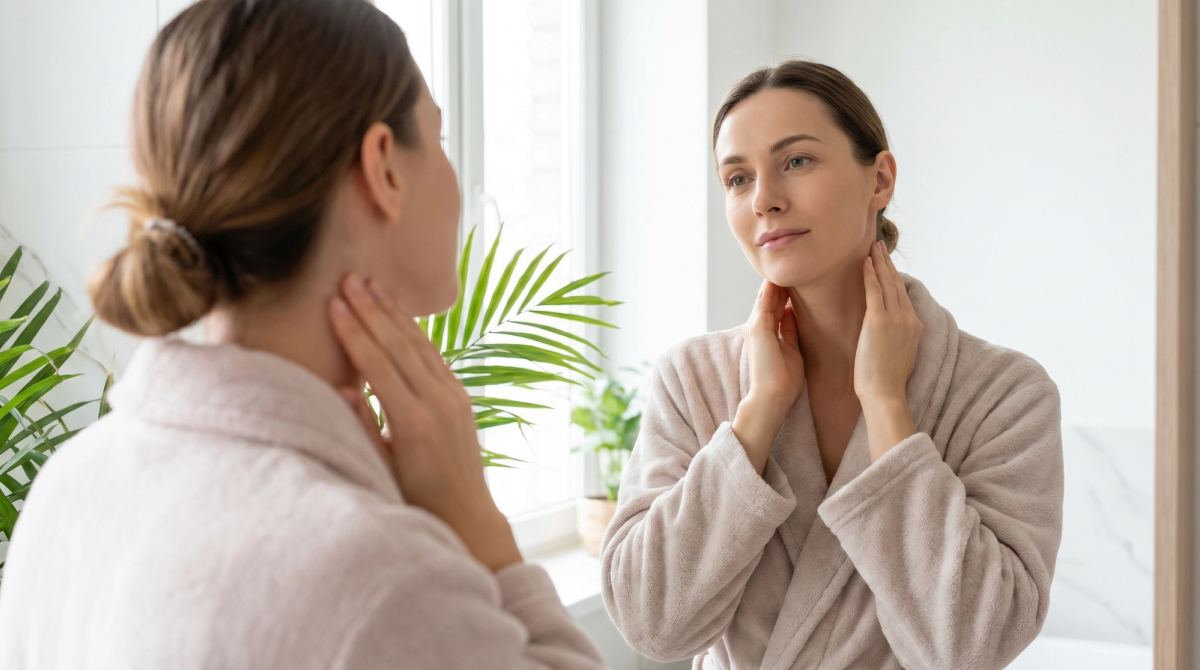


Lymphatic drainage has become one of the most talked-about self-care practices online. Yet most of us were never taught what the lymphatic system actually does, or how gentle techniques can fit into an everyday routine.
The lymphatic system works continuously to help maintain fluid balance and support immune function. Lymphatic vessels have their own rhythmic contractions, while breathing, muscle activity, and body movement also support lymph transport.
In this guide, you'll learn what lymphatic drainage is, what the research does and doesn't say about its benefits, and a simple at-home routine you can do in under ten minutes.
Quick takeaway: Lymphatic drainage uses gentle, skin-level techniques intended to support lymph movement. For general wellness, it can be incorporated alongside regular movement, comfortable diaphragmatic breathing, and other healthy daily habits.
What is lymphatic drainage?
Lymphatic drainage is a gentle technique, either manual or movement-based, intended to help lymph fluid move through your body. Forget firm pressure. It's light and slow — closer to skimming the surface of your skin than working into your muscles..
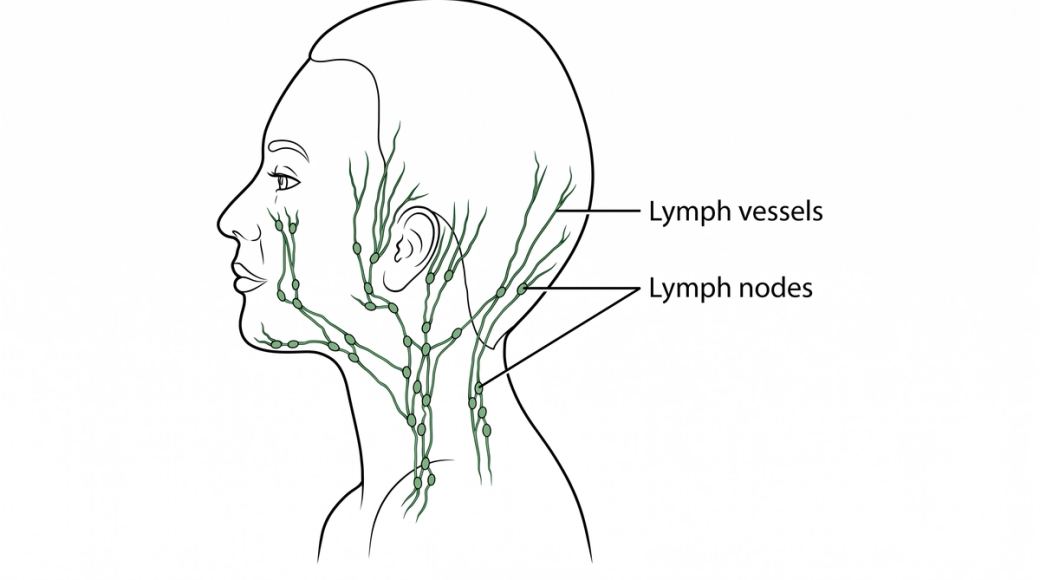
What your lymphatic system actually does
Your lymphatic system is a network of thin vessels and small filter stations called lymph nodes. It runs alongside your blood vessels and carries lymph: a clear fluid full of immune cells, proteins, and metabolic waste.
Unlike the cardiovascular system, the lymphatic system does not have a single central pump. Instead, lymphatic vessels contract rhythmically on their own, while muscle activity, breathing, and changes in body position help keep lymph moving. Gentle skin-level techniques, like lymphatic drainage, are intended to support that movement.
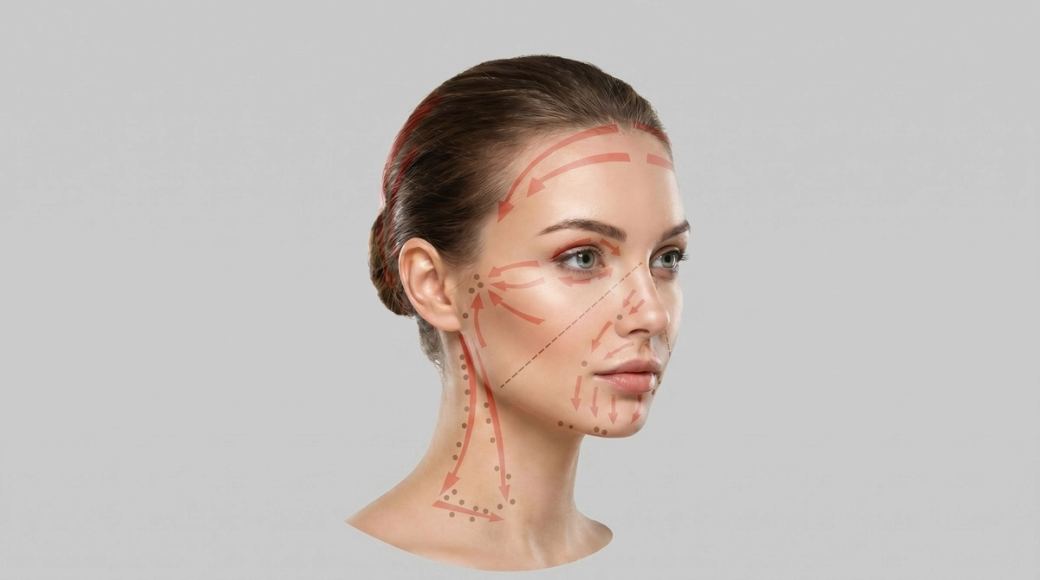
Why lymph flow matters
The lymphatic system plays an important role in maintaining fluid balance, transporting lymph, and supporting immune function. Everyday movement, muscle activity, breathing, and changes in body position contribute to lymph transport.
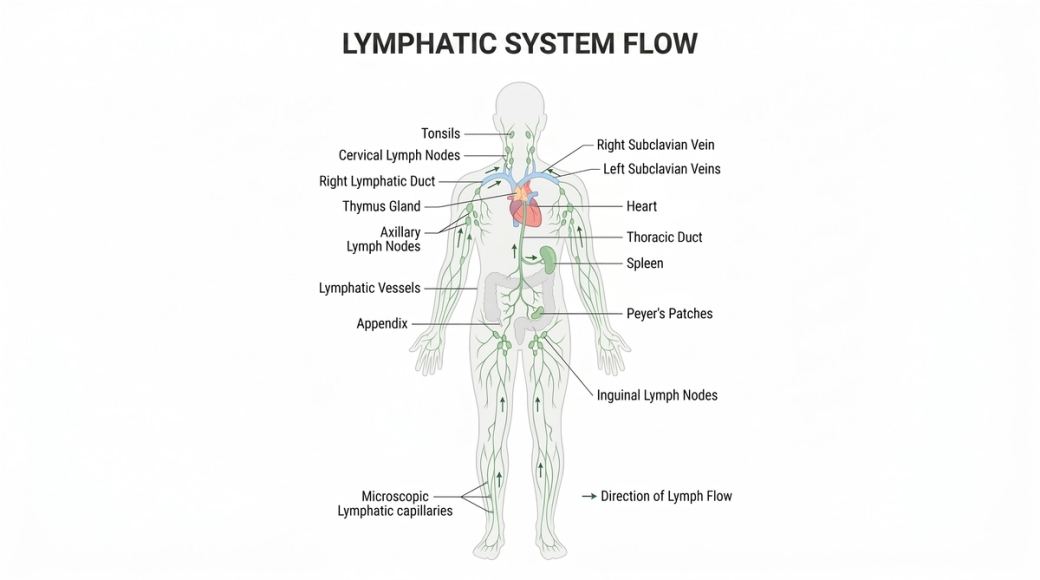

Gentle movement. Comfortable breathing. Simple daily habits.
Changes worth paying attention to
Changes such as swelling or feelings of heaviness can have many causes and should not automatically be interpreted as signs of lymphatic dysfunction. Persistent, new, or unexplained symptoms may warrant medical evaluation.
Common changes people notice include:
- Puffiness in your face, especially in the morning
- Heaviness in your legs by the end of the day
- Bloating that doesn't seem food-related
- Frequent low-grade fatigue
- Catching every cold that goes around
Benefits of lymphatic drainage
Lymphatic drainage is talked about a lot online, and the promises tend to get big.
Gentle lymphatic techniques may help manage certain types of swelling and can provide a relaxing self-care experience. For otherwise healthy individuals, evidence supporting additional benefits remains limited.
In practice, that comes down to:
- ✦ Fluid and puffiness — gentle, rhythmic techniques are used to help move fluid along and may ease certain types of swelling, particularly in the face and legs.
- ✦ A calmer moment in your day — slow, repetitive touch is simply relaxing for a lot of people. That's also why it sits comfortably alongside other stress management strategies like breathwork and somatic movement.

Types of lymphatic drainage
There's no single right way to support lymph flow. Different approaches suit different goals, schedules, and bodies. Some involve hands-on technique; others just ask you to move — and the gentlest ones are usually the ones you'll actually keep up.
Self-massage at home
Self lymphatic drainage uses light, skin-stretching strokes you can do on yourself — most often on the neck, face, abdomen, and legs. The movement is a gentle stretch of the skin, not a massage of the muscle underneath.
Pressure should be feather-soft — roughly the weight of a coin resting on your skin. If your skin turns red, or you notice yourself pressing, ease off. Lymph vessels sit just beneath the skin surface, so firm pressure works against the technique rather than for it.
Order matters as much as pressure. Central areas, such as the abdomen and the area just above the collarbones, are prepared first, followed by areas progressively farther from the center of the body.
Manual lymphatic drainage (MLD)
MLD is a hands-on therapy developed in the 1930s by Dr. Emil Vodder. It uses very light, rhythmic skin stretches applied in a set sequence.
You'll find MLD offered by certified therapists and some specifically trained massage practitioners. It's typically used where there's a specific medical reason for it, and a qualified therapist will adapt the sequence to your situation rather than applying a fixed routine.
Dry brushing
Dry brushing uses a natural-bristle brush on bare skin, moving in long strokes toward the heart. It takes three to five minutes, and it's essentially exfoliation — it sloughs off dead skin cells, and plenty of people find it an invigorating way to start the day.
However, dry brushing is a skincare and self-care habit, not a lymphatic technique. The pink flush and light tingle afterwards are normal skin responses to friction, not a sign of anything happening to your lymph.
Best done before a shower on dry skin. Start at your feet and work upward in light strokes — never scratchy. Two or three times a week is plenty, and skip any irritated or broken skin.
Movement and breathing
Walking, rebounding (jumping on a mini trampoline), yoga, and breathwork all support lymph flow by engaging muscles and the diaphragm, and the pressure changes they create help fluid move through the body. Unlike hands-on techniques, these need no training or sequence — you can just do them.
Even gentle activity counts. Your calf muscles act as pumps when you walk, deep breathing shifts pressure between your chest and abdomen, and twisting motions compress and release tissue.
A short walk you take most days is easier to keep up than an occasional hour at a gym you dread.

How to do lymphatic drainage at home (step-by-step)
This sequence takes 7–10 minutes and needs nothing but your hands and a quiet corner. Work through it in order: it begins with central preparation — diaphragmatic breathing, the abdomen, and the area just above your collarbones — before progressing outward to the neck, underarms, and legs.
- Diaphragmatic breathing. Lie down or sit comfortably. Place one hand on your belly and take five slow, easy breaths, letting your belly rise on each inhale. Deep breathing changes the pressure inside your chest and abdomen, and those pressure shifts help fluid move back toward the bloodstream. Keep it relaxed; there's nothing to force here.
- Abdomen. Keeping your breathing slow and easy, make gentle clockwise circles around your belly button with a flat palm, 10–20 rotations, keeping the pressure light. Many people simply find this settling. Skip it if the area feels tender.
- Above the collarbones. With flat fingers and barely any pressure, make small circles in the soft hollows just above your collarbones (the supraclavicular area) — about ten. You're stretching the skin, not pressing into the tissue underneath. This completes the central preparation; the next steps move outward.
- Neck. Place flat fingers behind your ears and gently slide the skin downward toward your collarbones. Ten times on each side, light as anything.
- Underarms. Cup your hand into the opposite underarm and pump gently ten times. Switch sides. This prepares the area the arms and upper body drain toward.
- Legs — top first, then lower. Begin at the top: light upward strokes over the groin and upper thigh, about five on each side. Only then move to the lower leg, using long, light upward strokes from ankle toward thigh, three to five times per leg.
- Finish with breath. Five more slow belly breaths to close.
These practices are intended for general wellness and are not a substitute for individualized medical care. Avoid massage over areas of infection, suspected blood clots, or unexplained swelling. Individuals with significant heart or kidney conditions should seek medical guidance before beginning lymphatic massage.
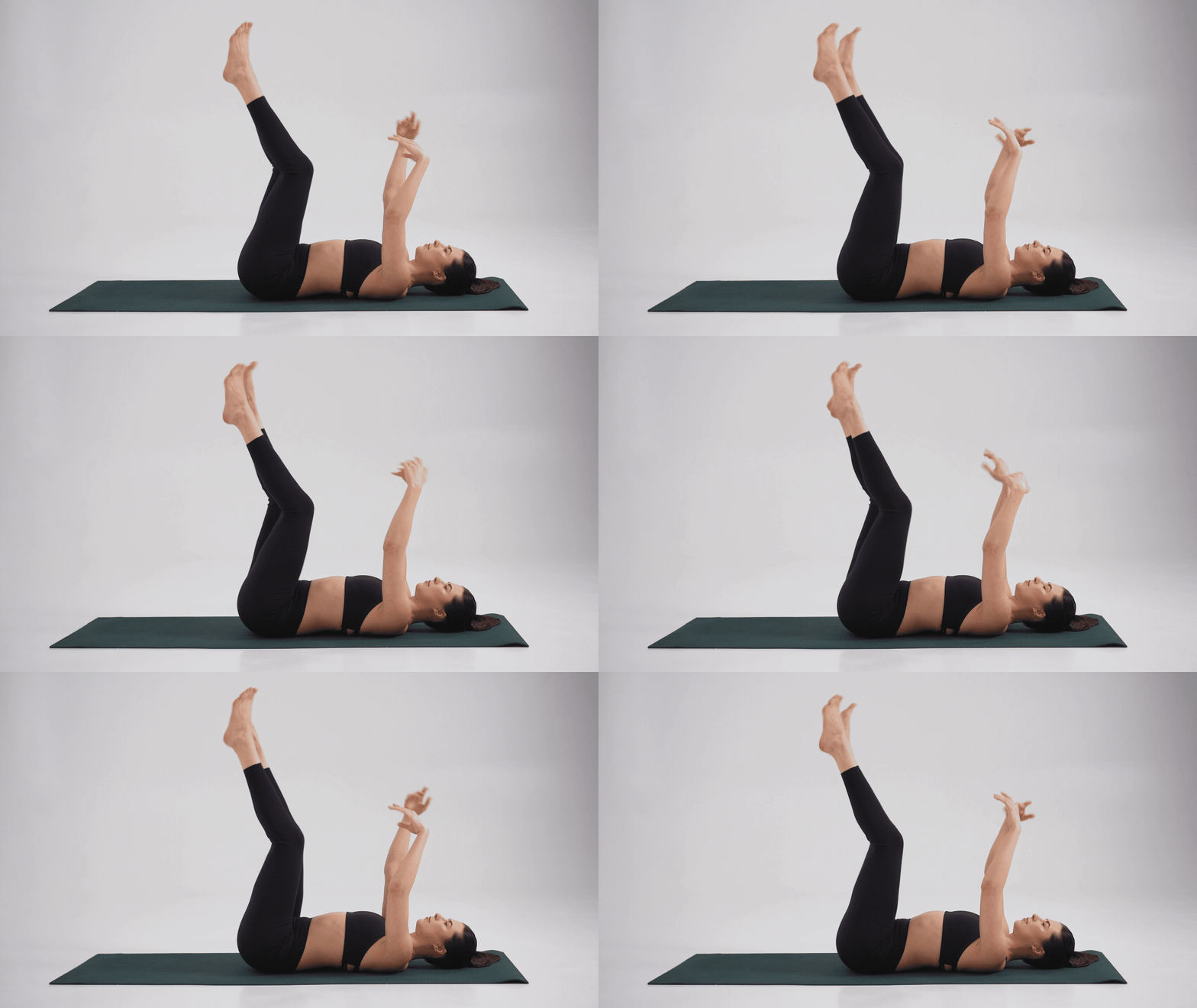
How often should you do lymphatic drainage?
For general wellness, these gentle practices can be incorporated regularly according to comfort and preference. Short, consistent routines may be easier to maintain than longer, occasional sessions.
The best frequency is the one you'll actually stick to. If five minutes after a shower works better than thirty minutes on Sundays, choose the five minutes. Using Leaply for lymphatic drainage can make this easier — the app's short guided sessions take the guesswork out and keep the practice simple enough to repeat.
Pair it with something you already do daily (morning coffee, evening skincare, brushing your teeth) and consistency starts to feel automatic rather than effortful.
Listen to your body. If you feel lightheaded or unusually tired — take a break.
Your lymphatic system is continuously working to maintain fluid balance and support immune function. Simple daily practices such as comfortable diaphragmatic breathing, regular movement, and gentle muscle activity can support its natural processes. Consistency matters more than intensity.
Lymphatic drainage and fascia
Your fascia is the connective tissue that wraps around every muscle, organ, and blood vessel in your body. Lymphatic vessels don't sit in isolation — they run through this tissue and interact with it, which is why the two are often talked about together.
What we can say with confidence is simpler than most of the internet suggests: normal body movement helps support fluid transport. Gentle stretching and mobility work fit naturally into a broader wellness routine, and they're worth doing on their own terms — for how your body feels when you move regularly.
So if you spend long stretches sitting, the useful takeaway isn't a theory about compressed vessels. It's just that your body does better when it moves.
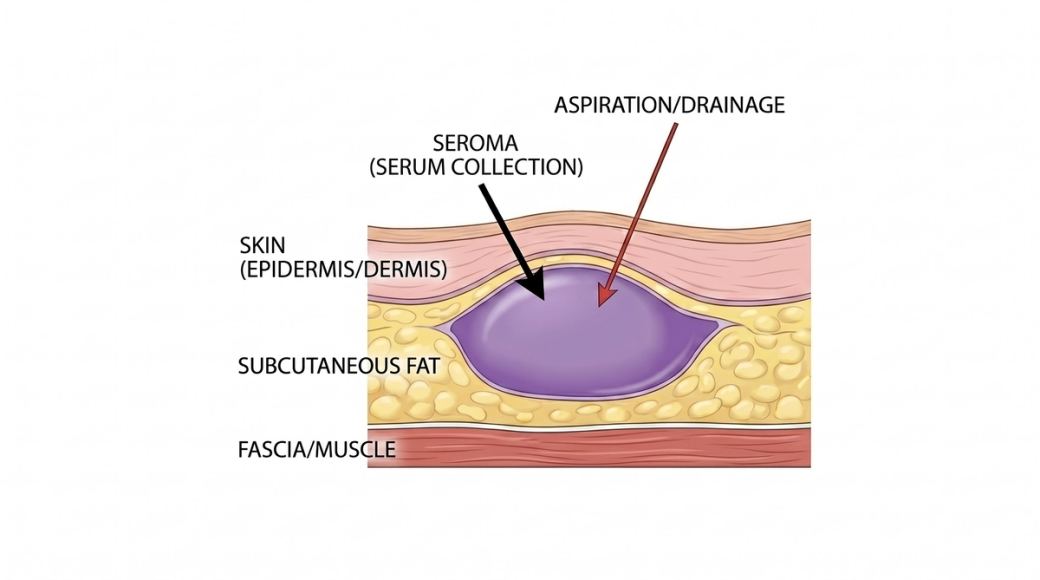
How Leaply supports lymphatic health
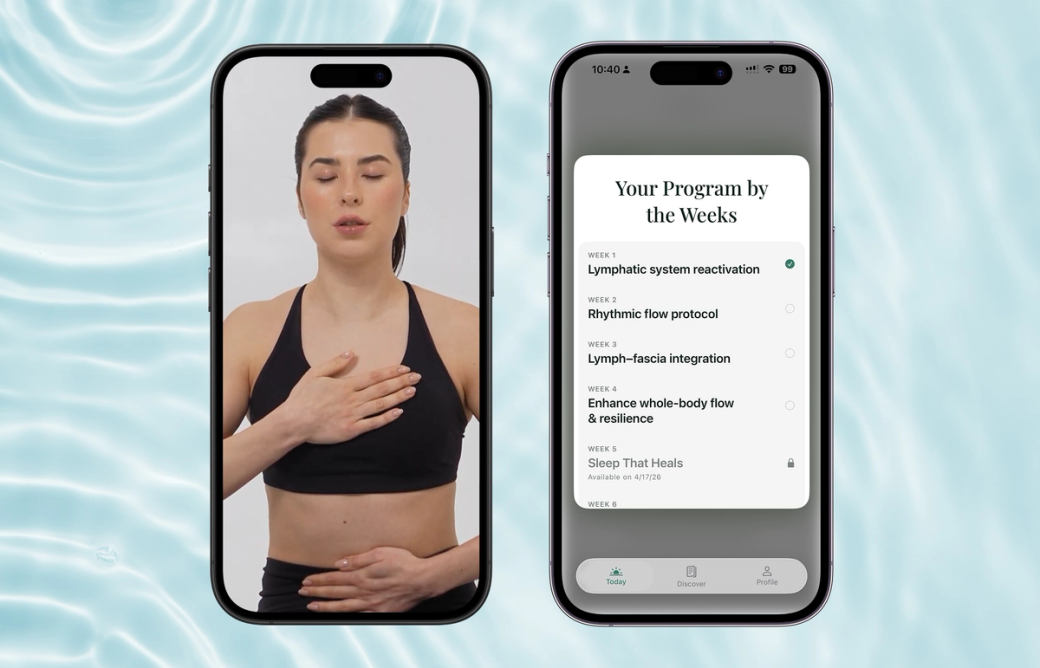
Leaply brings together breathing, gentle movement, and self-care practices in short, guided sessions designed to help you establish consistent wellness habits. The idea is that the routines are short enough to survive a busy week.
The Lymphatic Reset Program walks you through structured daily sessions combining gentle self-massage, guided breathing, and easy movement. If you've been looking for an app for lymphatic drainage that doesn't feel intimidating or overly clinical, this was built for exactly that.
The Leaply fascia program focuses on gentle stretching and mobility and can be used alongside other movement and wellness practices.
A ten-minute routine you return to most days is a practice. An hour you book once and never repeat isn't.
Leaply is a wellness product and isn't intended to diagnose, treat, or replace individualized medical care.
Frequently Asked Questions
Is there an app for lymphatic drainage?
How long does it take to see results?
Can I do lymphatic drainage every day?
What do Leaply reviews for lymphatic drainage say?
The bottom line
Lymphatic drainage is a gentle practice rather than a quick fix. For general wellness, comfortable breathing, regular movement, muscle activity, and gentle self-care practices can support the body's natural lymphatic processes. Consistency matters more than intensity.
If you'd like to begin, start small: a few minutes of the simple sequence above, at a pace that feels comfortable.
If you'd like a guided version, try Leaply for lymphatic drainage and let the Lymphatic Reset plan walk you through the full practice routine step-by-step.
Related articles

Movement Breaks: Get Kids Moving to Reset Focus
Movement breaks reset a child's focus by working the body first. Here's the science, when to use them, and movement break ideas for class or home.

Easy Brain Breaks for the Classroom
Brain breaks for the classroom: an evidence-informed teacher's guide to quick movement resets that refocus a class — by grade, energy level, and transition.

Brain Breaks for Students: Elementary & Middle School
Brain breaks for elementary and middle school students — age-appropriate movement resets that refocus a class or a tween at home, without the kiddie feel.
Brain Breaks for Kindergarten and Preschool (Ages 3–6)
Brain breaks for kindergarten and preschool: short, playful movement pauses for ages 3–6 that reset wiggly focus at circle time or at home.