
How to Reset Your Lymphatic System at Home



Puffy face in the morning, rings that feel tighter than they did last night, legs that feel heavy after a long day at a desk. It's the kind of thing that sends plenty of people searching how to reset your lymphatic system, hoping for a protocol that gets them back to baseline.
Here's the thing worth knowing before you start. Your lymphatic system isn't waiting to be switched back on. It works continuously to maintain fluid balance and support immune function, and it's doing that right now while you read this. Breathing, muscle activity, and changes in body position help support those natural processes — which is really what everyone means by "reset."
So what follows isn't a protocol for fixing something broken. It's the at-home version: what "lymphatic reset" actually refers to, the daily practices behind it, and an honest take on detox and flush claims.
Key Takeaways
- Your lymphatic system works continuously to maintain fluid balance and support immune function. Breathing, muscle activity, and changing position help support its natural processes.
- "Lymphatic reset" is a wellness term, not a medical one. Nothing needs restarting.
- What it refers to in practice: breathing, gentle movement, light self-massage, hydration, sleep, and food — simple habits, done regularly.

What is a lymphatic reset?
Let's be straight about the term first. "Lymphatic reset" is wellness language, not physiology. There's no medical process by that name, and your lymphatic system doesn't have an off state that a routine switches back on. It's a phrase people use for a set of habits — which is fine, as long as nobody's selling it to you as something more.
A lymphatic wellness routine is a collection of simple daily practices that support the body's natural lymphatic processes. Regular movement, comfortable breathing, and consistent self-care can contribute to overall well-being.
In practice, that's a few slow breaths, some light touch on the skin, and enough movement through the day that you're not sitting still for hours at a stretch.
Our Lymphatic Reset program is built from exactly these practices: breathing, gentle movement, and light self-care — put into a daily structure so you don't have to assemble it yourself.

Gentle movement. Comfortable breathing. Simple daily habits.
What actually supports lymph movement
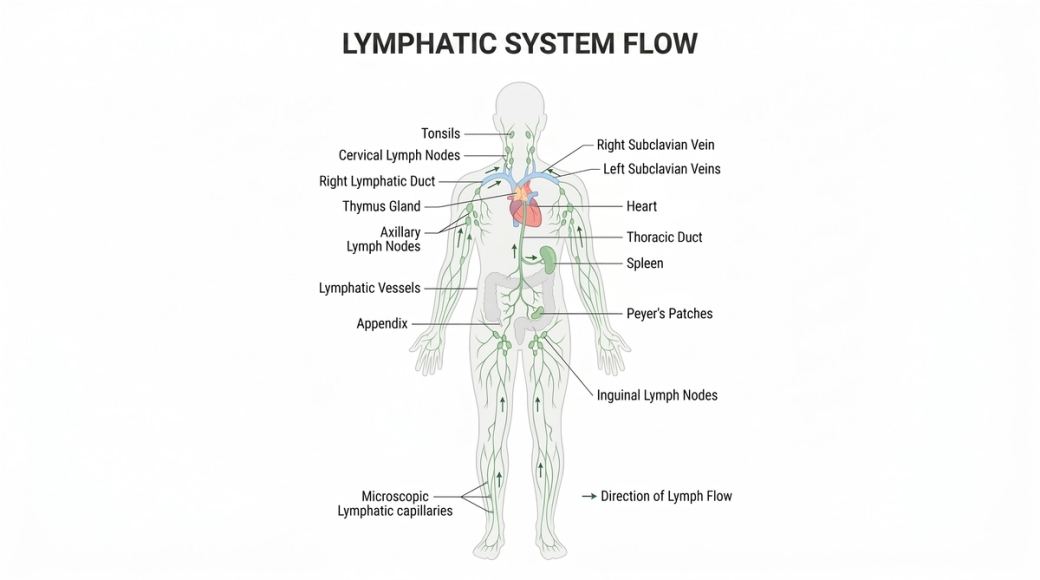
Your lymphatic system runs in the background all day, and it doesn't wait for permission. Its vessels contract rhythmically on their own, keeping fluid moving in one direction. What it doesn't have is a central pump driving the whole network the way your heart drives your blood, so it's built to work alongside what you're doing with your body.
Three everyday things support it:
- Muscle contraction — calf muscle activity during walking supports fluid movement in the lower extremities. Regular movement throughout the day also supports the body's natural lymphatic processes.
- Comfortable deep breathing — breathing into your belly changes the pressure between your chest and abdomen, and those shifts help support fluid movement.
- Changes in body position — simply not staying in one shape for hours. Standing up, stretching, shifting how you sit.
Modern life is fairly good at removing all three. Long hours at a desk, shallow breathing under stress, whole afternoons in one position. The lymphatic system continues to function on its own, while regular movement, comfortable diaphragmatic breathing, and changes in body position can support its natural processes.
For more on the underlying mechanism, our article on lymphatic drainage goes further.
Your lymphatic system is continuously working to maintain fluid balance and support immune function. You don't need to reset it. Simple habits such as comfortable diaphragmatic breathing, regular movement, and adequate rest can support your body's natural processes. The goal is consistent care, not forcing your body to work harder.
How to reset your lymphatic system: the daily practice
Here's the at-home version. The steps aren't a checklist to complete — they're complementary, and most people start with one or two and layer more in as the habit settles.
Step 1: Comfortable diaphragmatic breathing
The most underrated item on the list, and the easiest to fit in.
Lie on your back or sit comfortably, one hand on your belly. Breathe in through your nose, letting the belly rise more than the chest, then let the breath out slowly and easily. Keep going for as long as it stays pleasant.
Deep breathing changes the pressure between your chest and abdomen, and those shifts help support fluid movement through the body. Don't chase a particular count or rhythm — a pattern that leaves you lightheaded or straining isn't doing more for you; it's doing less. Slow and comfortable is the whole instruction.
More breath sequences in our 5 moves for your lymph.
Step 2: Gentle movement
Walking, stairs, ankle pumps at your desk, shoulder rolls, easy yoga, bouncing on a mat. None of it has to be a workout.
Muscle activity supports lymph movement throughout the body — not just your legs, though sitting all day is why legs are usually where you notice it. Shoulders and arms count too, which is why shoulder mobility is worth adding if you work at a desk.
Short periods of movement can be incorporated throughout the day according to individual preference and routine.

Step 3: Light self-massage (optional)
Hands-on technique follows a specific order — central and proximal lymphatic regions are prepared first, then the limbs.
So rather than a condensed sequence here, check out our lymphatic drainage at home guide. Two principles carry across all of it:
- The movement is a gentle stretch of the skin, not pressure into the tissue underneath. Think of moving the skin along with your hand rather than massaging what's below it.
- Lighter than you'd expect. If you notice yourself pressing, ease off. This isn't a technique where more effort earns more result.
If you want a single sequence, the lymphatic reset plan lays out the same practices day by day.
Step 4: Hydration
Maintain adequate hydration throughout the day. If a glass of water on waking helps you remember, use it as an anchor — with or without lemon, whichever makes you more likely to drink it.
Worth being clear on what hydration isn't doing here: drinking more water doesn't thin your lymph or speed up drainage, and no specific drink has been established as necessary for a healthy lymphatic system. Staying hydrated is simply good for you, which is reason enough.
Step 5: Nutrition and overall health
Not a "lymphatic diet" — there isn't one.
Enjoy a balanced, varied diet that supports overall health. Leafy greens, citrus, berries, beets, fatty fish, and avocado are all worth eating, and none of them is doing anything specific to your lymphatic system. No food, beverage, or supplement has been established as necessary to reset a healthy lymphatic system.
If eating well is the part you'd like help with, our foods guide covers a weekly rhythm — treat it as general nutrition rather than a drainage protocol.

Step 6: Sleep and a calmer evening
Adequate, restorative sleep supports overall health.
Choose a comfortable sleeping position that meets your individual needs. You'll see left-side sleeping recommended for drainage specifically; that isn't an established recommendation for otherwise healthy people, and a position that keeps you awake isn't helping you.
What's worth more attention is the hour before bed: a walk after dinner, a few slow breaths, less screen. Sleeping well is the goal, and everything that gets you there counts.
More on the topic in our sleep and lymphatic system piece.
Step 7: Dry brushing (optional)
Dry brushing is an optional skincare practice. Evidence that it improves lymphatic drainage is limited — what it reliably does is exfoliate, and plenty of people find it a pleasant way to start the day. Use gentle pressure and avoid irritated, broken, or sensitive skin.
Genuinely optional. If you enjoy it, enjoy it. If it's one more thing on a list you're already struggling with, skip it.
Where would you like to start?
Lymphatic detox vs. lymphatic flush: what these words actually mean
If you've been searching for a lymphatic detox or a lymphatic flush, here's the answer most articles skip: neither is an established medical process. There's no valve to release, no cleanse to perform, and nothing backed up waiting to be let out. Your lymphatic system continuously contributes to fluid balance and immune function.
What people usually mean when they search how to detox your lymphatic system naturally is simpler: how do I look after myself without supplements, juices, or anything intense? Regular movement and comfortable breathing can support your body's natural processes, and they're worth doing on their own terms. That's the honest version of what "lymphatic detox naturally" looks like in practice.
The term "flush" is also wellness language rather than a physiological process. The lymphatic system continuously transports lymph; it does not require a cleanse or flush.

When a structured lymphatic reset program helps
Some people would rather follow a plan than assemble one. That's what our Lymphatic Reset program is for: breathing, gentle movement, and self-care practices in short guided sessions, with gentle stretching and mobility work alongside them for comfort and flexibility.
What we hear most is that the short format was the first one people managed to keep up. Ten minutes fit into a day you're already having — before the shower, after dinner, in the gap between calls. There's nothing to decide each morning and nothing to skip because you don't have time. That's usually the hard part, and it's the part the plan actually solves.
These practices are intended for general wellness and are not a substitute for individualized medical care.

Wondering what's in your plan?
When morning puffiness is something else
A daily routine is for general wellness. Some signals sit outside what any routine can address, whatever side of the body they're on.
New, persistent, or unexplained swelling warrants medical evaluation. Seek prompt medical attention for sudden swelling, particularly when accompanied by pain, redness, or warmth. Swelling with chest pain or difficulty breathing requires emergency medical attention.
Frequently asked questions
How do you reset your lymphatic system naturally?
Is a lymphatic detox real?
Do I need a lymphatic reset program, or can I do this at home?
Final thoughts
Your lymphatic system isn't waiting on you. It works continuously to maintain fluid balance and support immune function, and moving, breathing well, and changing position throughout the day support those natural processes. That's the whole picture.
So not every puffy morning needs an intervention, and no routine needs to be elaborate. Pick one thing tonight — a few slow belly breaths, a short walk after dinner — because it's pleasant and because it's good for you generally.
Leaply's quiz helps you explore guided wellness routines based on your preferences and goals.

A routine that fits a normal week
Related articles

Calming Brain Breaks: Quiet Activities to Settle Kids Down
Calming brain breaks: quiet, breath-and-balance activities that settle a wound-up child, including rainbow breathing, for home or the classroom.

Movement Breaks: Get Kids Moving to Reset Focus
Movement breaks reset a child's focus by working the body first. Here's the science, when to use them, and movement break ideas for class or home.

Easy Brain Breaks for the Classroom
Brain breaks for the classroom: an evidence-informed teacher's guide to quick movement resets that refocus a class — by grade, energy level, and transition.

Brain Breaks for Students: Elementary & Middle School
Brain breaks for elementary and middle school students — age-appropriate movement resets that refocus a class or a tween at home, without the kiddie feel.