
Brain Activation Exercises for Kids: A Parent's Guide
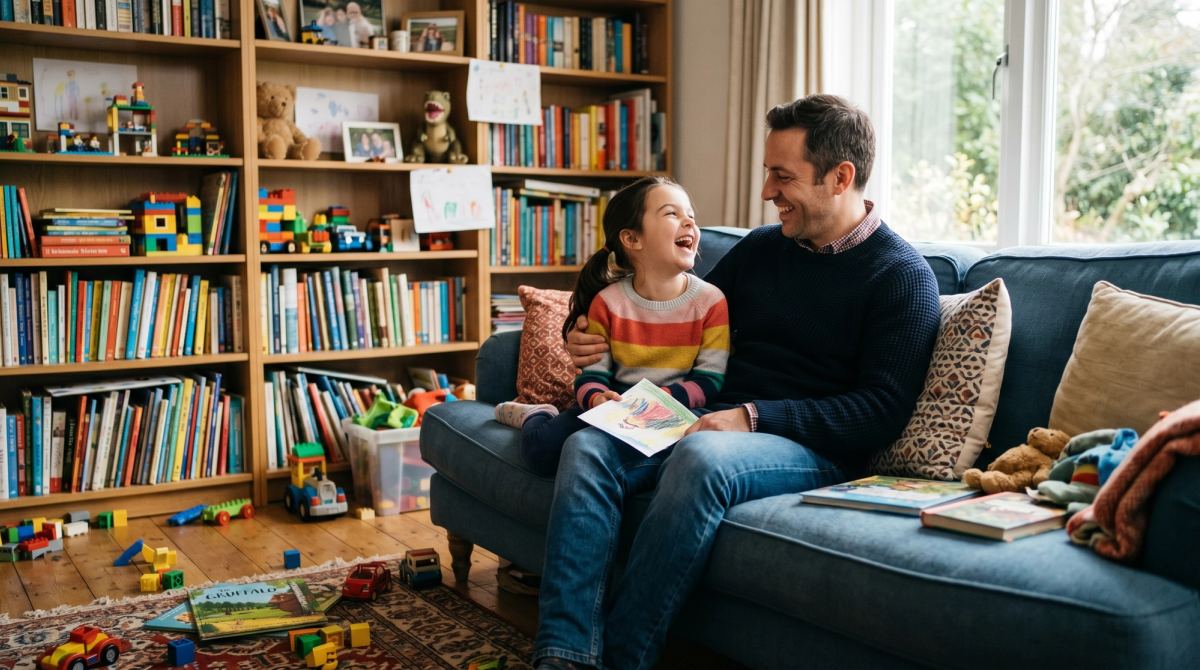

You're at the supermarket and your child melts down over the wrong-colour spoon. They can't sit through homework, but built an elaborate fort yesterday for ninety unbroken minutes. They come off the iPad, and the next twenty minutes are reactive in a way they aren't the rest of the day.
If any of that sounds familiar: nothing is broken.
Bright minds often develop faster than self-control. When you see a meltdown, scattered focus, or survival mode, the brain is still building its wiring — and the body is one of the most direct ways to help it. That's the idea behind brain activation exercises for kids: short, repeated, movement-based practices that strengthen the connection between body and brain, so focus, self-regulation, and bouncing back from frustration get easier over time.
This guide covers what brain activation exercises are, the neuroscience that makes them work, seven you can start this week, and how to know they're landing.
Key takeaways
- Brain activation exercises for kids are short movement-based practices that build the body-brain connection.
- They target brain agility — focus, self-control, and bouncing back from frustration.
- They work because young brains are wiring fast — what neuroscience calls neuroplasticity.
- The most useful exercises cross the body's midline: cross-crawls, lazy 8s, finger drills, and balance work.
- Consistency beats intensity. Five focused minutes a day beats thirty minutes once a week.
What are brain activation exercises for kids?
Brain activation exercises for kids are short, movement-based practices designed to engage specific brain pathways through coordinated body movements, breath, balance, and cross-body coordination. They aren't flashcards. They aren't screen games. They aren't fitness workouts. The goal isn't to make a child stronger — it's to give the brain better wiring through the body.
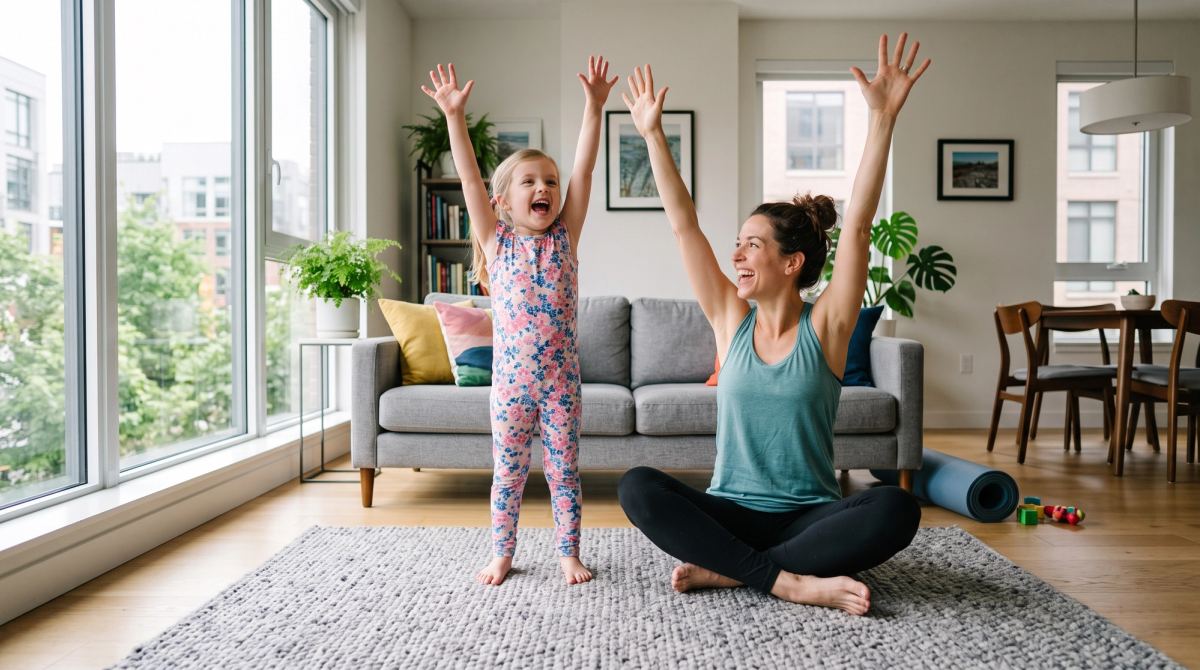
Each exercise is small — a minute or two at a time. Most are done together, parent and child side by side. That isn't sentimental; it's how children's nervous systems learn to settle, by borrowing the regulation of a calm adult next to them.
What brain activation exercises aren't: a substitute for paediatric care, a behaviour-control system, or a guaranteed result. They're a daily input — small, repeated, body-based, that a developing brain can use.
Brain agility: what these exercises actually build
Brain agility exercises share one job: training the working blend of focus, self-control, and the ability to bounce back from frustration. We call the construct itself brain agility for kids — the mental flexibility behind almost everything kids are asked to do: stay with a task long enough to finish it, switch gears when plans change, recover from "I can't" without a meltdown.
Why agility, not strength? The child who can stay focused when the room gets loud, change activities without resistance, and lose at a game without falling apart — that's brain agility at work.
What is brain agility, exactly?
Brain agility is the working blend of focus, self-control, and recovery from frustration. It's what lets a child finish what they started, shift attention when needed, and bounce back from small disappointments without spiralling. It develops with practice — and the practice is mostly physical.
The science: how children's brains grow
- Neuroplasticity in children. In childhood, the brain forms and prunes connections faster than at any other life stage. Every repeated practice — every rep of paying attention, every recovery from a small setback — physically shapes the wiring. The Harvard Center on the Developing Child calls this "brain architecture": skills aren't given; they're built, brick by brick.
- Windows of opportunity. Focus, self-control, and bounce-back wire fastest through the early grade-school years. Real progress comes from short, repeated moments of the right kind of play — what neuroscientists call windows of opportunity. Long, infrequent sessions don't use the window. Brief, daily reps do.
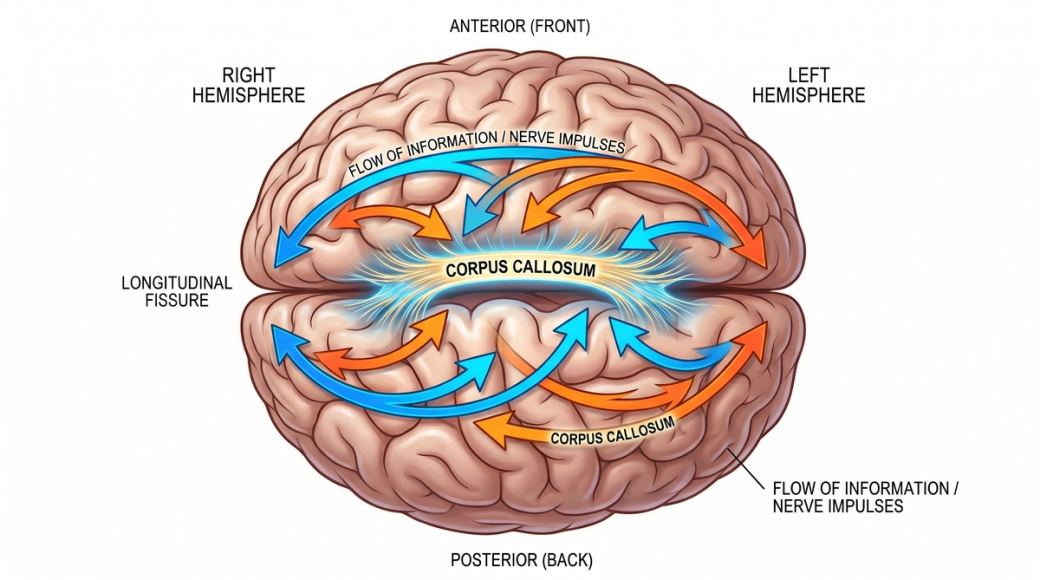
- The brain-body connection. The body sends roughly as much information up to the brain as the brain sends down. For a child, movement is brain work. Brain-body connection exercises for kids built around crossing the body's midline force the two halves of the brain to coordinate through the corpus callosum — hemispheric integration. That's the mechanical reason cross-crawls and lazy 8s show up in nearly every movement-based programme.
A 2018 study in BioMed Research International tested this directly: 116 fifth-graders did six-minute daily coordinated-bilateral exercises — mid-line crossings, progressive difficulty — for four weeks. Their processing speed, focused attention, and attention span improved significantly versus a control group that only wore activity trackers. Tracking steps didn't move the needle; asking the body and brain to talk to each other did.

Where to start?
How brain activation exercises differ from "brain training" and "brain gym"
"Brain training for kids" gets used as a catch-all, but the category actually splits into very different things. Worth knowing the differences before you commit a daily routine to one of them.
- Brain-training apps: screen-based games that train working memory and processing speed. Useful for narrow cognitive skills, but the body never enters the loop.
- Brain gym exercises for kids — the broader movement-education tradition: mid-line work, cross-lateral movements, balance, eye-tracking. Brain activation exercises overlap heavily with this tradition. The difference is design — sequenced as a daily home practice rather than delivered through a class.
- In-person brain-training centres: assessment-led, multi-month, often expensive — a different category entirely.
Where brain activation exercises sit: at home, parent-led, 5 to 15 minutes a day, non-diagnostic, no equipment. We took what works in movement-based brain practice and made it small enough to fit between breakfast and the school run.
7 brain activation exercises you can start this week
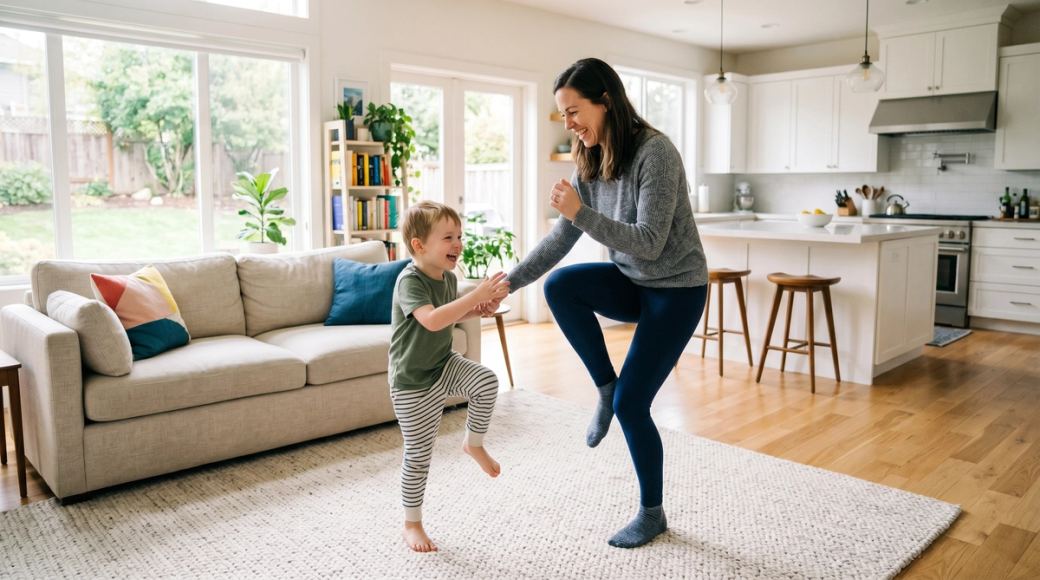
1. Cross-crawls. Opposite hand touches opposite knee, slowly, eyes tracking the moving hand. The mid-line crossing engages both hemispheres at once — the foundational brain-body connection exercise for kids. You'll see: a steadier gaze within thirty seconds.
2. Lazy 8s. Trace a horizontal figure-eight in the air with one finger; eyes follow. Visual mid-line crossing — it calms a busy nervous system while loading focus. You'll see: slower breathing by the third trace.
3. Belly breathing in pairs. Child's hand on your belly, yours on theirs; six slow cycles together. The mutual touch is a co-regulation cue — the child's nervous system synchronises with yours. You'll see: shoulders drop on both of you.
Try these three before adding more. If your child resists, do it yourself first — kids tend to follow the model, not the instruction. If you'd rather a sequence built around your child's age and the concerns that top your list right now, the personalized plan on our quiz will set it up.
4. Finger drills. Thumb to each fingertip in turn, both hands at once, then alternating. Fine motor plus bilateral processing — a small exercise with surprisingly heavy cognitive load. You'll see: a tongue poking out in concentration.
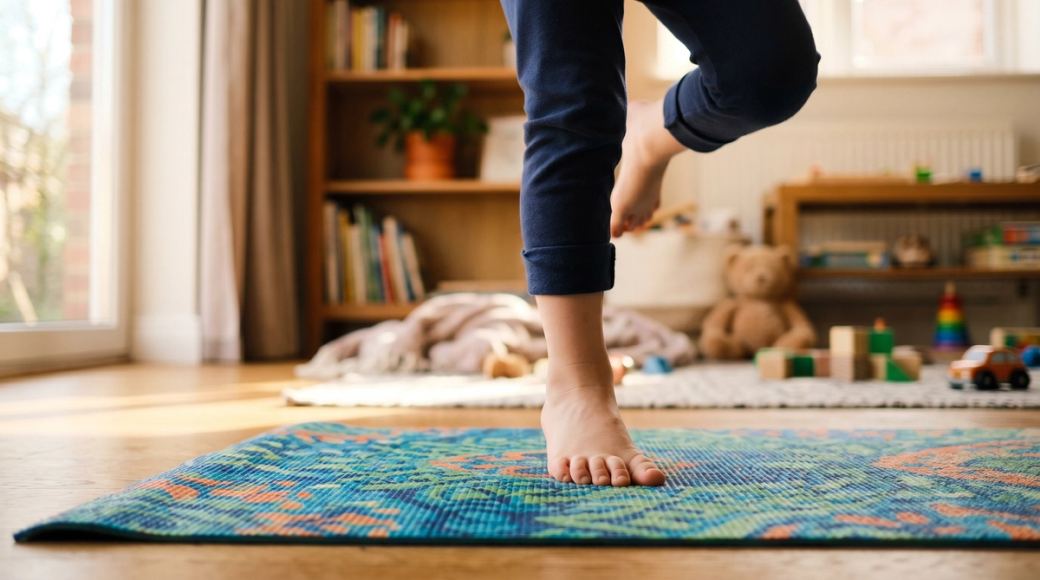
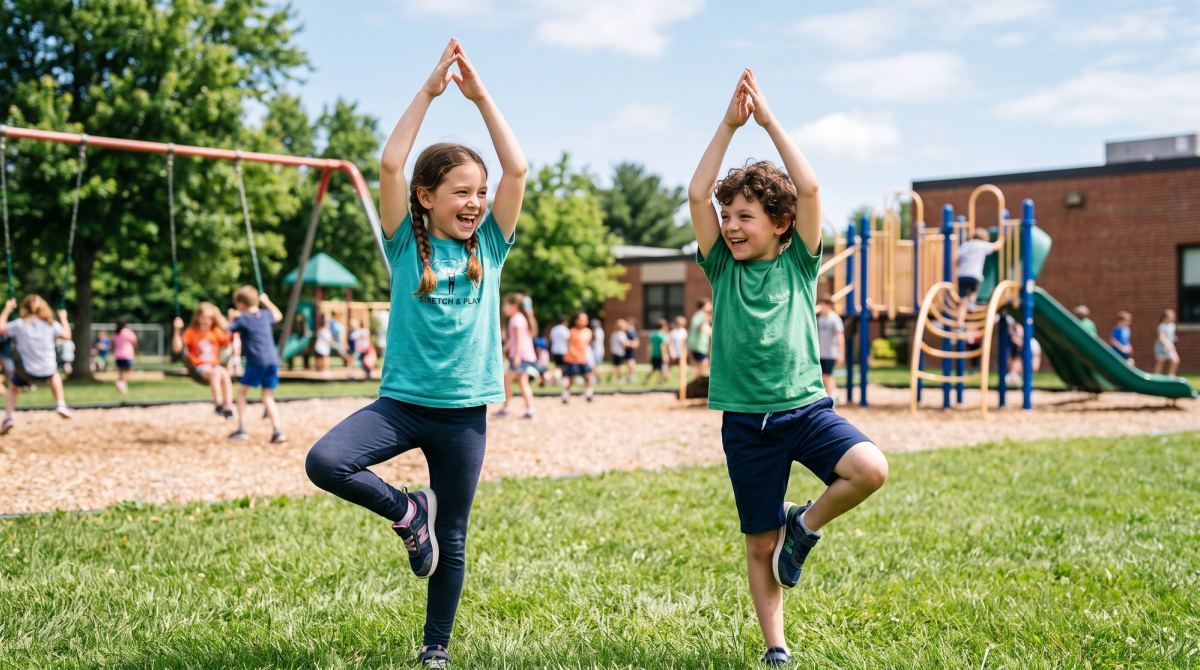
5. Balance on one foot with a story. The child stands on one foot while telling you about their day. Balance recruits the cerebellum; talking adds cognitive load. You'll see: the story slowing at first, then steadying.
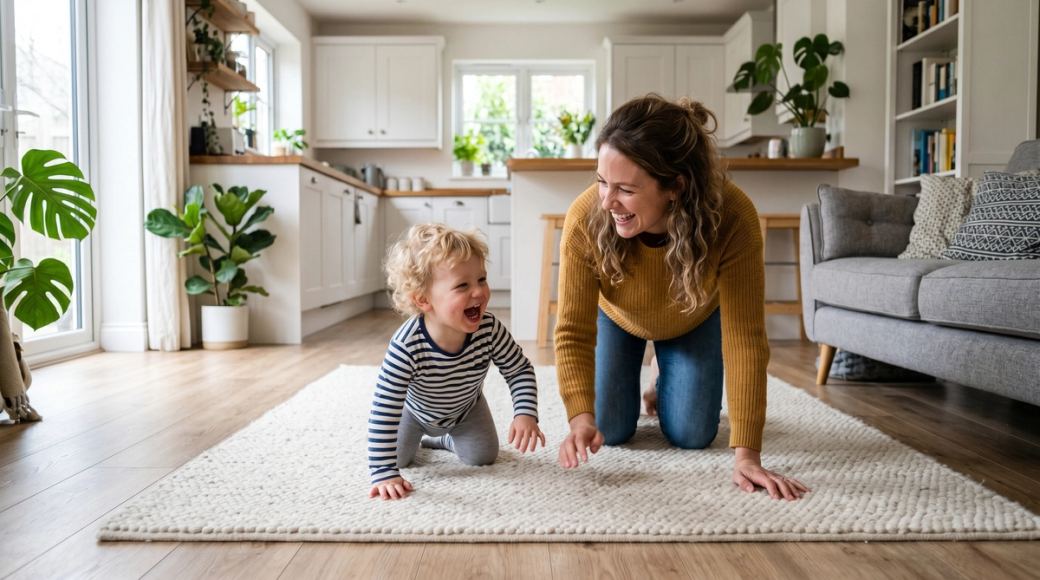
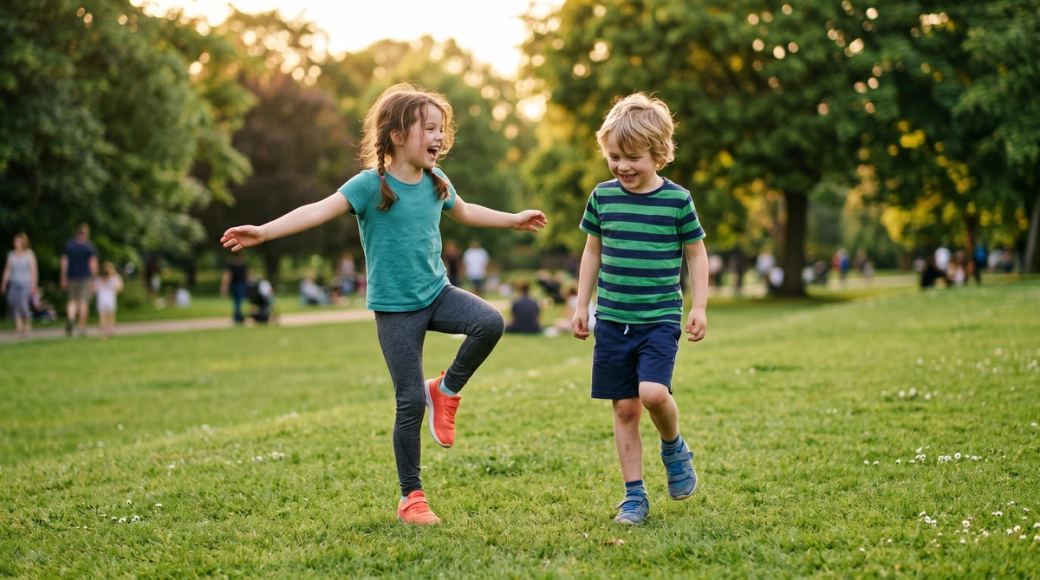
6. Animal walks. Bear crawl, crab walk, frog hops, across the room, and back. Proprioceptive input and sensorimotor activation give the sensory cues a nervous system is often quietly looking for — the "internal noise" that drives chewing or fidgeting gets a clean outlet here. You'll see: a child who couldn't sit still settle for ten minutes afterwards.
7. The "name it to tame it" game. Child names what they feel before reacting — "I'm frustrated" — and you label back. Naming a feeling recruits the prefrontal cortex under emotional load. You'll see: the gap between feeling and reaction widening over a few weeks.
What's hardest right now?
How to know it's working
Brain activation exercises don't give you a graph. They give you small shifts you have to look for.
Weeks 1–2: smoother transitions — leaving the playground, closing the iPad, getting shoes on. Slightly easier mornings.
Weeks 2–4: a longer pause between feeling and reacting. The child uses the "name it" language unprompted. Bounce-back from disappointment is shorter than it was.
Weeks 4–8: focus stamina extends. Meltdown frequency drops, and intensity drops before frequency — what used to last twenty minutes starts ending in five.
Progress isn't linear. Some weeks, the brain consolidates by getting harder before it gets easier — that's normal. Consistency over intensity is the thesis: five focused minutes a day beats thirty once a week, every time.
When daily exercises aren't enough
A daily practice supports development; it doesn't replace specialist care. If you're seeing persistent severe withdrawal, self-harm, repeated aggression that doesn't ease with co-regulation, or a sudden shift in behaviour after a stressful event, that's a different conversation from this one — your paediatrician or a child psychologist is the right next step.
This isn't a question of whether something is "wrong." It's a question of which support fits.
Frequently asked questions
What are brain activation exercises for kids?
How long does it take to see results?
Are brain activation exercises the same as brain gym exercises for kids?
A small daily input the brain can use
Meltdowns, scattered focus, and big reactions aren't broken behaviour. They're a bright mind outpacing agility — and the agility can be built, a few minutes at a time.
Brain activation exercises for kids give the brain its next rep. Pick one of the seven above. Do it for a week. Add the next when the first feels like a habit.
Want it personalized?
Related articles

Calming Brain Breaks: Quiet Activities to Settle Kids Down
Calming brain breaks: quiet, breath-and-balance activities that settle a wound-up child, including rainbow breathing, for home or the classroom.
Movement Breaks: Get Kids Moving to Reset Focus
Movement breaks reset a child's focus by working the body first. Here's the science, when to use them, and movement break ideas for class or home.

Easy Brain Breaks for the Classroom
Brain breaks for the classroom: an evidence-informed teacher's guide to quick movement resets that refocus a class — by grade, energy level, and transition.
Brain Breaks for Students: Elementary & Middle School
Brain breaks for elementary and middle school students — age-appropriate movement resets that refocus a class or a tween at home, without the kiddie feel.