
9 Signs Commonly Blamed on Sluggish Lymph



You look in the mirror, and your face is a half-size fuller than it was last night. Your rings sat fine before the flight; now they're tight. By 3 pm, your legs feel like they're filled with wet sand, and none of it lines up with what you ate or how much you slept.
Changes such as morning puffiness, tight rings, or heavy legs can occur for many reasons. While the lymphatic system contributes to fluid balance, these experiences alone do not tell us whether lymphatic function is impaired.
The lymphatic system continuously transports fluid through rhythmic contractions of its vessels. Breathing, muscle activity, and changes in body position provide additional support for lymph movement. Sitting still for hours or breathing shallowly doesn't switch the system off; it just takes away some of the support it works with.
Below are the 9 signs most often described as sluggish lymphatic system symptoms, what they may actually mean, when swelling needs a clinician, and a few simple ways to support your lymphatic health day to day.
Key takeaways
- Your lymphatic system moves fluid continuously on its own — its vessels contract rhythmically. Movement, deep breathing, and changing position support that process.
- Long periods of inactivity may contribute to temporary changes in how your legs feel, but persistent or unexplained swelling shouldn't be put down to lifestyle alone.
- Morning puffiness, heavy legs by evening, and deeper marks from rings or socks are the patterns most often described as sluggish lymphatic system symptoms — but swelling has many causes, and these signs alone can't tell you what's behind it.
- Much of what gets blamed on sluggish lymph online (frequent colds, breakouts, brain fog, cold hands) points elsewhere.
- Short, gentle routines are easier to keep up than occasional intensive ones. Consistency is the hard part.

What changes in fluid balance can look like
Your lymphatic system is your body's drainage and clean-up network. It runs alongside your veins, carrying fluid, immune cells, and cellular waste through hundreds of small filter stations — clustered most densely at the neck, armpits, groin, and behind the knees.
The vessels themselves do real work: they contract in a slow, rhythmic pattern that keeps fluid moving in one direction. What they don't have is a central pump driving the whole network the way your heart drives your blood.
Movement, muscle activity, diaphragmatic breathing, and changes in body position can support normal lymph transport. Puffiness or heaviness, however, can have many causes and should not be used alone to determine whether lymphatic function is impaired.
Which of these sounds most like you right now?
9 signs commonly blamed on sluggish lymph (and what they may actually mean)
Search this topic, and you'll find the same nine signs repeated everywhere. Here are all nine, with an honest verdict on each.
First, the framing that matters most. Swelling, heaviness, and changes in how clothing or jewelry fit can have many causes. Although the lymphatic system contributes to fluid balance, these symptoms alone cannot determine whether lymphatic function is impaired.
So treat what follows as things worth noticing about your own body — not as a checklist that diagnoses anything.
1. A puffier face in the morning
You wake up looking softer and fuller — eyes hooded, jaw less defined than the night before.
Mild morning facial puffiness can occur for a variety of reasons and may change after becoming upright and moving around. Persistent, new, or unexplained facial swelling warrants further evaluation.
What to notice: how it changes through the morning and whether it's new or sticking around longer than usual. The pattern across two weeks tells you more than any single morning.
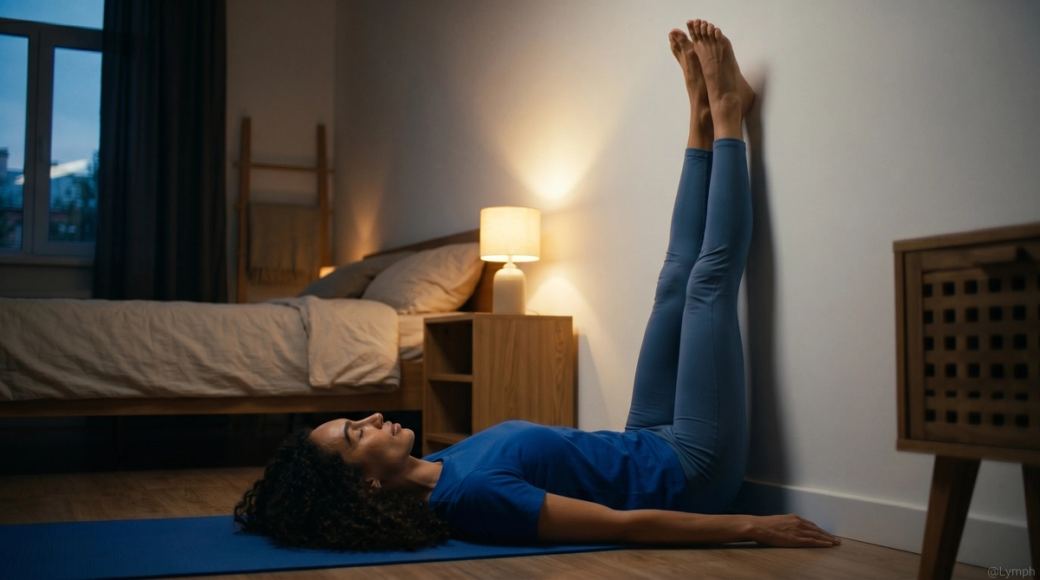
2. Heavy, achy legs by evening
It's 4 pm, and your legs feel like they're filled with wet sand. For some people, sitting makes it worse, while walking or putting their feet up makes it feel better.
Calf muscle activity during walking supports fluid movement in the lower extremities. Notice when heaviness occurs and what activities or positions affect it; persistent or unexplained symptoms should be discussed with a healthcare professional.
3. Rings, watches, and sock bands leaving deeper marks
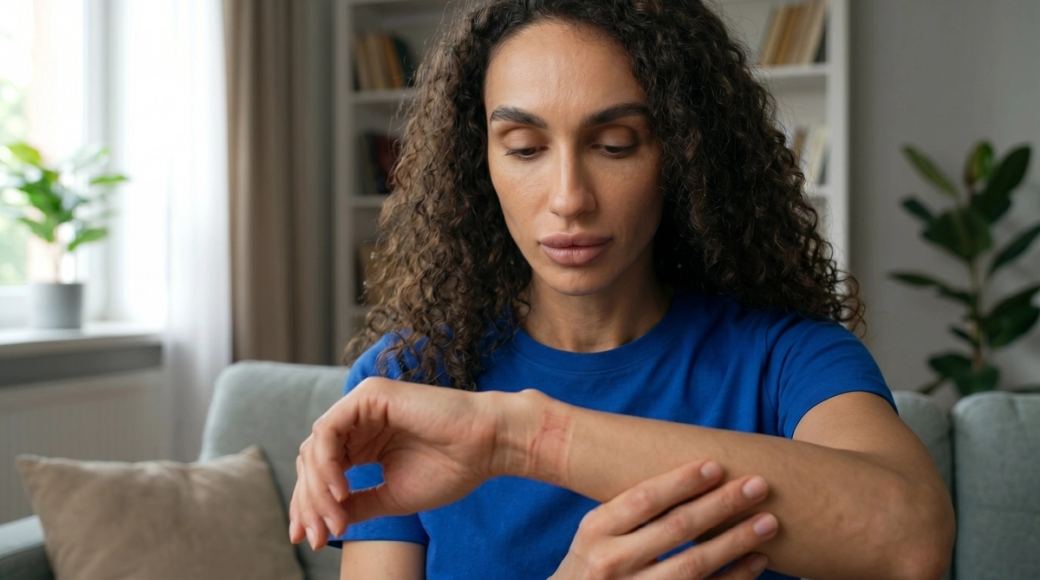
You take off your watch, and the impression is still there fifteen minutes later. Sock lines stay visible long after the socks come off.
What to notice: the pattern over a week, not one day. Marks that are noticeably worse on one side than the other are worth mentioning to your doctor.
Your lymphatic system works continuously to maintain fluid balance and support immune function. Regular movement, comfortable diaphragmatic breathing, and changes in body position can help support its natural processes. Persistent or unexplained swelling deserves medical attention rather than an assumption that your lymphatic system is simply sluggish.
Commonly blamed on lymph — but the evidence points elsewhere
The next six come up constantly in wellness content as lymphatic symptoms. They're real experiences worth taking seriously; however, they don't tell you anything specific about your lymphatic system.
4. Bloating that doesn't match what you ate
Your stomach feels thick and heavy when you haven't eaten anything to explain it, and your waistband fits differently from one hour to the next.
Bloating is overwhelmingly a digestive story — what you ate, how quickly, how your gut handles particular foods, and where you are in your cycle. Tracking meals and timing for a couple of weeks will tell you far more than any lymphatic routine. If it's persistent or comes with pain, that's a doctor's conversation.

5. Catching every cold going around
You're the person who picks up every minor bug at the office, and recovery takes time.
Lymph nodes do house immune cells — but how often you get sick depends on sleep, stress, how much you're exposed to, and a dozen other things. Frequent infections don't establish that your lymphatic drainage is impaired. If you're genuinely getting ill more than most people around you, that's worth investigating properly rather than massaging.
6. Skin that's congested, dull, or breaking out along the jawline
Breakouts appear in places that don't match your usual pattern. Tone looks duller. Makeup sits on top of the skin instead of into it.
Jawline breakouts get attributed to lymph constantly. Acne has well-established drivers — hormones, oil production, bacteria, skin barrier condition — and jawline breakouts in particular often track with hormonal cycles. A dermatologist will get you further here than a drainage routine will.

7. Afternoon slumps that feel disproportionate
Around 2 or 3 pm, focus collapses, and small tasks feel heavier than they should.
You'll sometimes see research on lymphatic vessels in the membranes around the brain cited here. That's real science, but it's a different system from the one in your legs, and it doesn't explain your 3 pm slump. The usual suspects are more boring and more fixable: sleep quality, what you ate at lunch, hydration, and hours of unbroken screen time.
8. A stiff jaw, neck, and shoulders that won't release
You wake up with a tight jaw. By midday, your shoulders are up to your ears. Stretching helps for an hour, then the tightness returns.
This is a muscular and postural pattern, and stress lives in it. Desk setup, screen height, how you sleep, and jaw clenching are the places to look. Movement and stretching help not because they release lymph, but because they address the tension directly.
9. Cold hands and feet that take a while to warm
Your hands and feet are cold even when the room isn't, and warming up takes longer than it does for people around you.
This is about blood flow to your extremities, not lymph — they're separate systems. Plenty of people simply run cold. If it's new, severe, or affects one hand or foot more than the other, see your doctor rather than trying to fix it yourself.
When any of this needs a clinician
Swelling that doesn't resolve, swelling on one side of the body only, or swelling with pain, redness, or warmth belongs with a doctor rather than a self-care routine.
What swelling can and can't tell you
You'll often see swelling sorted into two neat categories — "sluggish" and "blocked", with a rule for telling them apart. But real swelling doesn't sort itself that cleanly.
Swelling can occur for many reasons, including prolonged sitting, changes in circulation, and underlying medical conditions. Its location, duration, and associated symptoms can provide useful information, but determining the cause may require medical evaluation.
A few things are worth unlearning here. Swelling on both sides isn't automatically the harmless kind — some of the causes that most need attention, including heart and kidney conditions, show up symmetrically. And lymphatic problems don't only affect one limb; they can involve one side or both. The one-sided-versus-both-sides rule you'll find repeated across wellness content simply isn't reliable in either direction.
What is useful to notice is the pattern over time: how long it lasts, whether it resolves with rest and elevation, whether it's new, and what else comes with it. That's information worth bringing to a doctor — it just isn't a diagnosis you can make at home.
Everyday factors that can affect how your legs feel
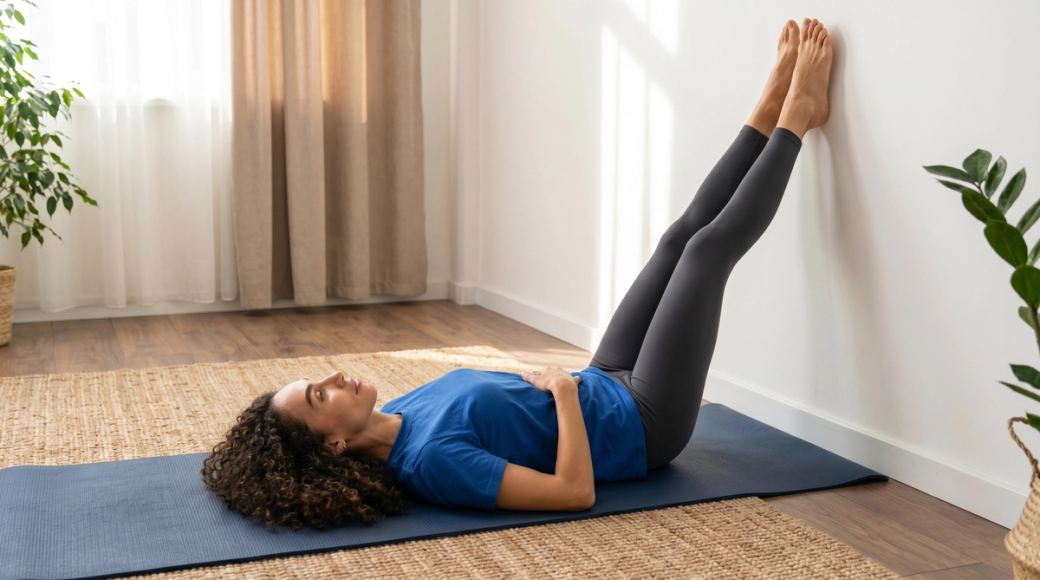
Everyday movement, muscle activity, comfortable diaphragmatic breathing, and changes in body position can support normal fluid movement. Long periods of inactivity may contribute to temporary changes in how the legs feel, but persistent or unexplained swelling should not be attributed to lifestyle alone.
Things that may contribute to temporary heaviness or puffiness:
- Long stretches of sitting — desk work, long flights, back-to-back meetings without standing up. Your calf muscles get little work for hours at a time, which may affect how your legs feel by evening.
- Shallow, chest-only breathing, which is what most of us default to under stress. Deeper breathing creates pressure changes between the chest and abdomen; shallow breathing doesn't.
- Staying in one position for hours, whatever that position is. Movement and changes in posture matter more than any single posture being "correct."
- Recent illness or a long flight — both can temporarily affect how your body feels. Swelling that doesn't settle, or swelling in one leg after a flight, should be checked by a doctor.
Simple at-home practices that support lymphatic health include movement, comfortable diaphragmatic breathing, and gentle touch.

Simple ways to support lymphatic health at home
Your lymphatic system does not require resetting. For general wellness, movement and comfortable diaphragmatic breathing are simple ways to support its natural processes.
You don't need equipment or supplements, just a bit of consistency and a gap in your day.
- Comfortable diaphragmatic breathing, with the belly expanding more than the chest. Deep breathing changes the pressure between your chest and abdomen, and those shifts help support fluid movement. Keep it easy and unforced.
- Movement that uses your calves — a walk, the stairs, ankle pumps under your desk. Short bouts spread throughout the day work as well as one longer one.
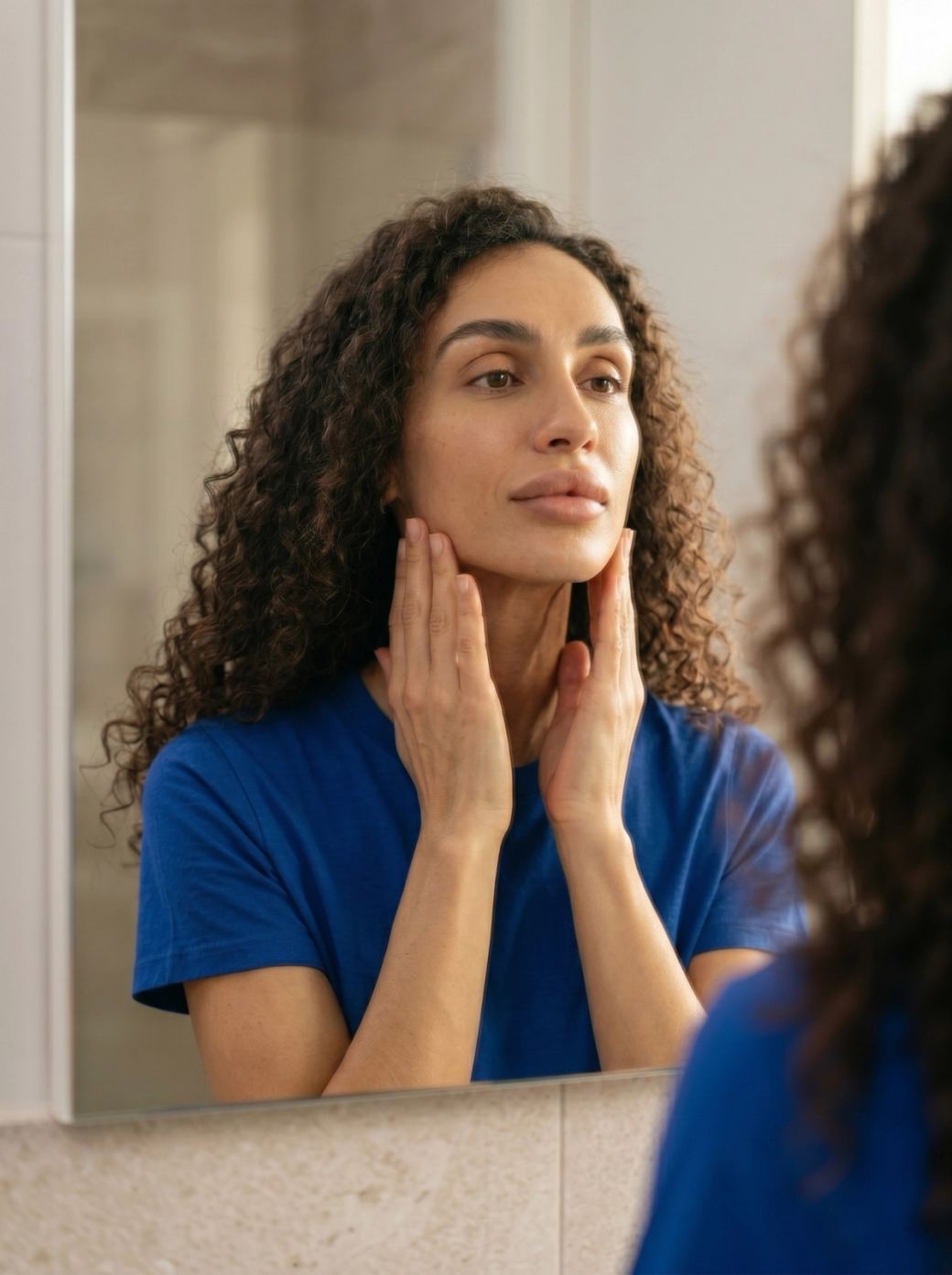
Hands-on technique is a different matter: it follows a set order, central areas first, then the areas closest to your trunk, then the limbs. Doing part of that order isn't a shortcut, so follow the full sequence in our step-by-step guide. Two principles carry across all of it — the touch is a light stretch of the skin, not pressure into the tissue, and the area just above the collarbones is sensitive, so keep it feather-light and stop if anything feels uncomfortable.
For more, see 5 simple moves to reset your lymph at home.
These practices are intended for general wellness and are not a substitute for medical evaluation or individualized treatment. Avoid massaging over areas of infection, suspected blood clots, or unexplained swelling. Individuals with significant heart or kidney conditions should seek medical guidance before beginning lymphatic massage.

When to call a doctor
Gentle wellness practices may be appropriate for otherwise healthy individuals, but new, persistent, unexplained, or concerning swelling should be medically evaluated. Route to a clinician first if any of the following are showing up:
- Swelling on one side only — especially if it came on suddenly or doesn't go down with rest or elevation.
- Skin warmth, redness, pain, or fever alongside the swelling.
- New, persistent swelling after treatment or any procedure that involved lymph node removal.
- Any unexplained swelling that's new, persistent, and doesn't match a clear trigger.
This isn't a list to be scared of. It's a list that helps you spend your energy in the right place.
Frequently asked questions
What are the early signs of a sluggish lymphatic system?
How do you tell if your lymphatic system is blocked?
Does lymphatic drainage help with weight loss?
How long does it take to notice a difference?
Final thoughts
Puffiness and heaviness are common experiences with many possible causes. Your lymphatic system moves fluid continuously on its own, while regular movement, comfortable diaphragmatic breathing, muscle activity, and changes in body position can support its natural processes. Persistent, new, or unexplained swelling deserves medical evaluation.
In practice, that means: stand up more often, take the stairs, and breathe into your belly when you remember to. If swelling is persistent, new, or unexplained, take it to a doctor rather than a routine.
If you'd like that structured into something you'll actually keep up, Leaply offers short, guided routines that combine breathing, gentle movement, and self-care practices to encourage consistent wellness habits. These practices complement, rather than replace, appropriate medical care. The Lymphatic Reset Program is built around the short format for exactly that reason — it's designed to survive a busy week.
Related articles

Calming Brain Breaks: Quiet Activities to Settle Kids Down
Calming brain breaks: quiet, breath-and-balance activities that settle a wound-up child, including rainbow breathing, for home or the classroom.

Movement Breaks: Get Kids Moving to Reset Focus
Movement breaks reset a child's focus by working the body first. Here's the science, when to use them, and movement break ideas for class or home.

Easy Brain Breaks for the Classroom
Brain breaks for the classroom: an evidence-informed teacher's guide to quick movement resets that refocus a class — by grade, energy level, and transition.

Brain Breaks for Students: Elementary & Middle School
Brain breaks for elementary and middle school students — age-appropriate movement resets that refocus a class or a tween at home, without the kiddie feel.